Indian Wedding Catering
Indian wedding catering for the whole celebration, not just one dinner. Build a menu across mehndi, haldi, sangeet or garba, ceremony meals, cocktail hour and reception with regional Indian food, live stations, thoughtful dietary planning and full-service execution.
What couples usually want to know first.
The food should change with the event.
An Indian wedding weekend can ask the caterer to do five very different jobs. The mehndi may need easy handheld food. The sangeet needs fast-moving stations that keep guests dancing. The ceremony day may call for a vegetarian regional lunch. Cocktail hour can carry the most playful bites. Then the reception needs a dinner that feels polished enough for a ballroom while still tasting unmistakably like your family.
The strongest menus are not the longest ones. They are edited for contrast: one crisp chaat instead of four versions of the same fried snack, a smoky tandoori course before a richer curry, rice and bread chosen around the mains, then desserts that feel deliberate rather than endless.
For large Southern California weddings, logistics matter as much as recipes. A live dosa counter needs dedicated equipment and chefs. Fresh naan needs an approved cooking setup. A 300-person buffet needs enough access points that dinner does not erase an hour of dancing.
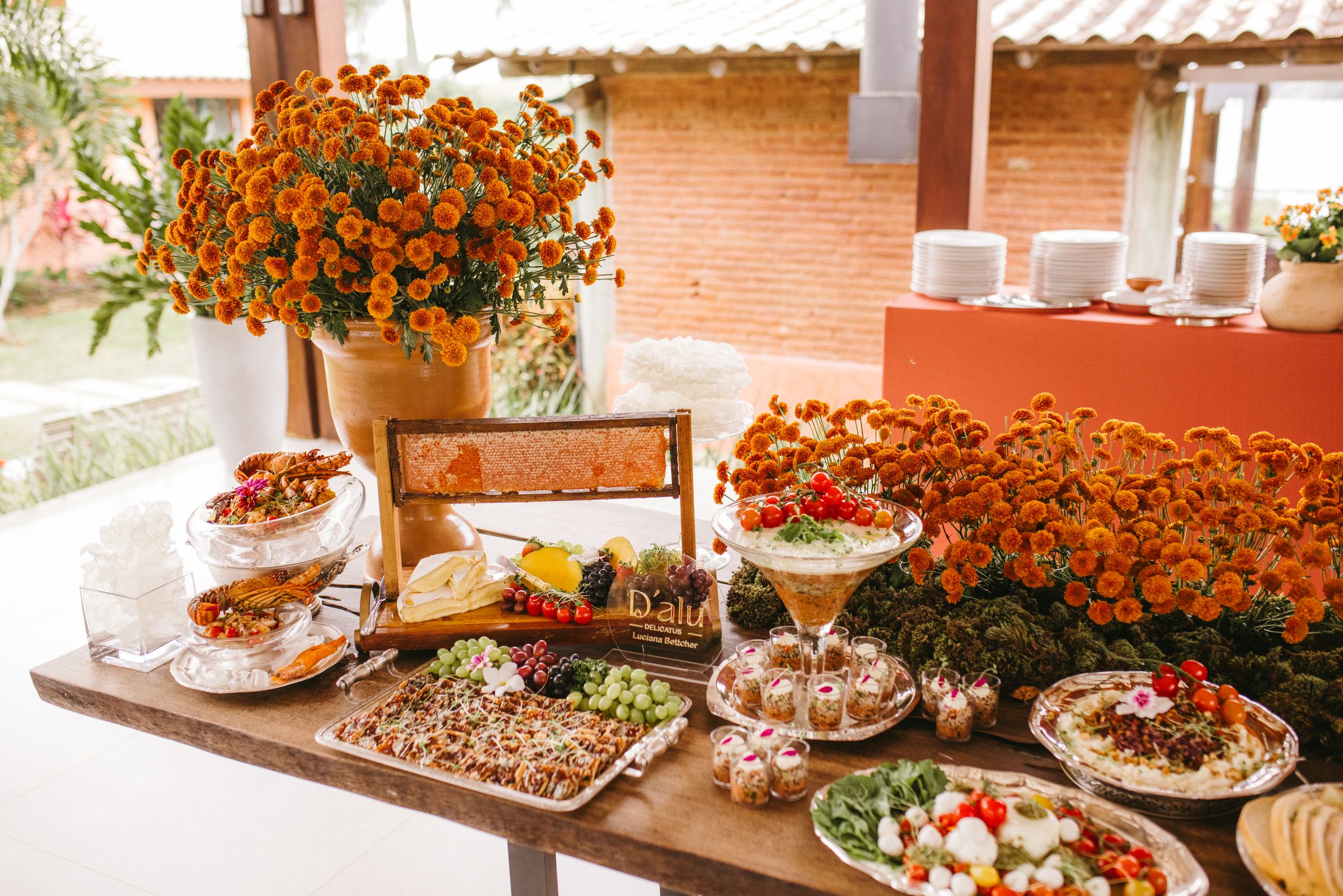
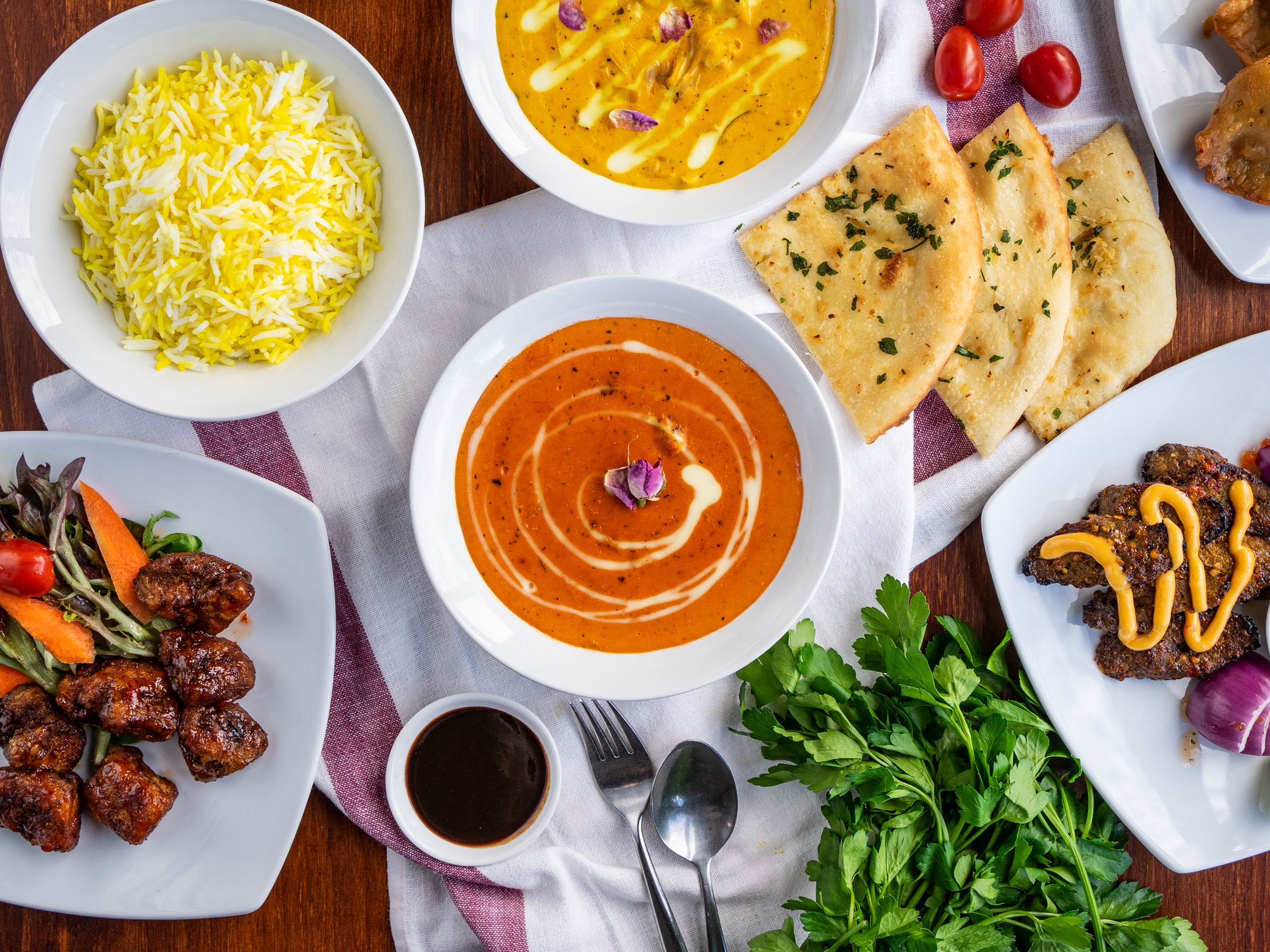
Indian wedding catering should feel abundant before the first plate is served.
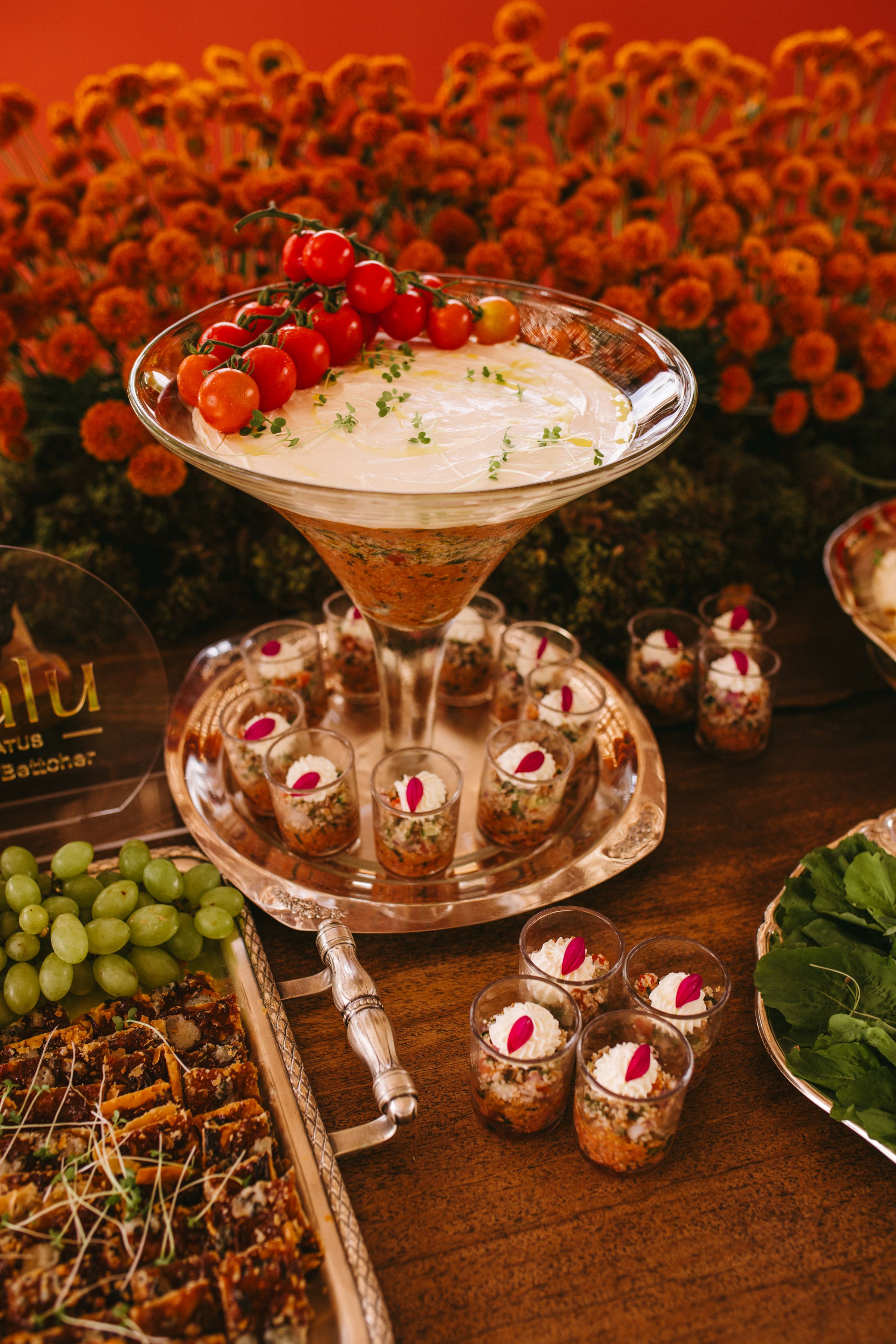
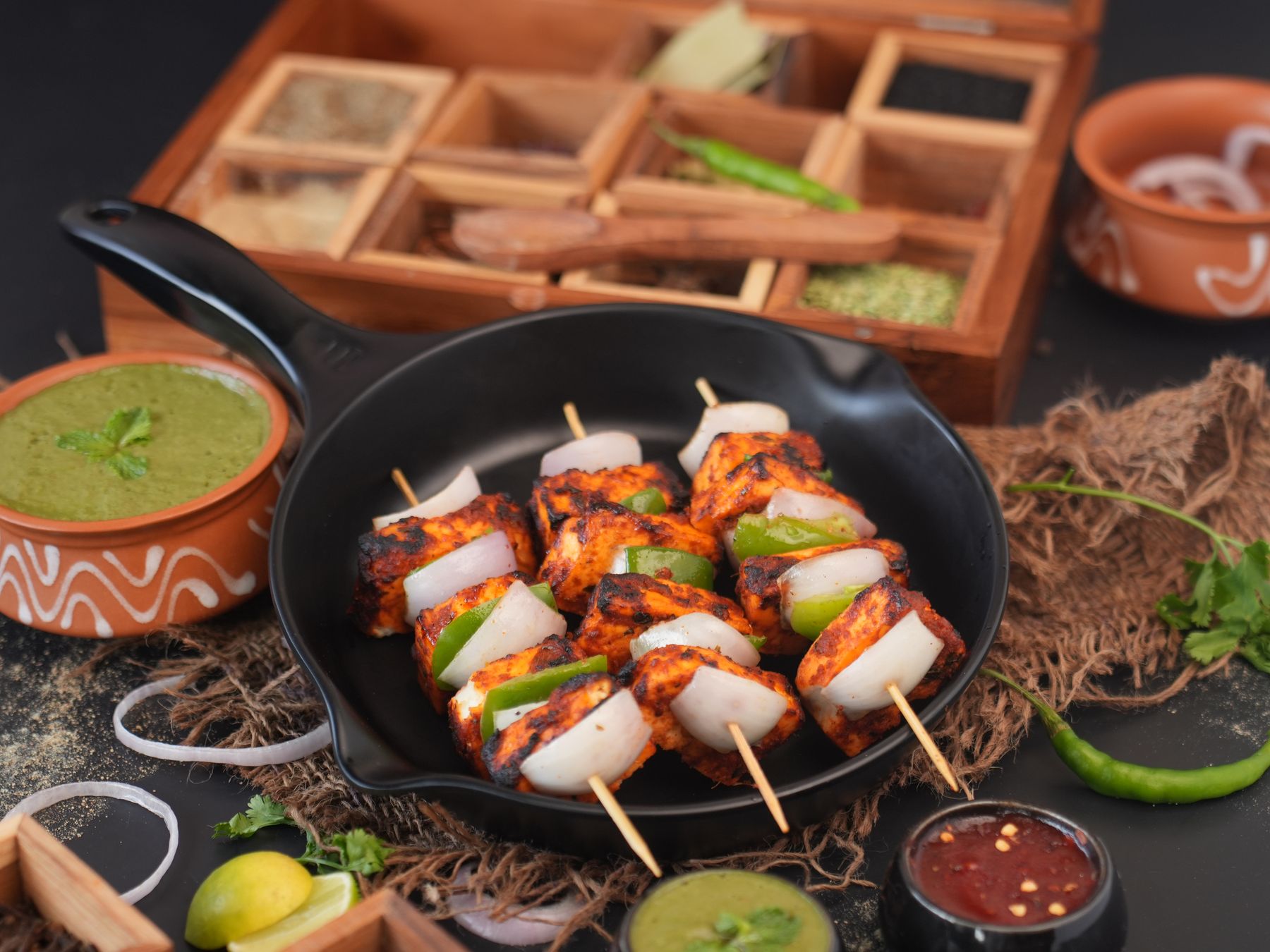
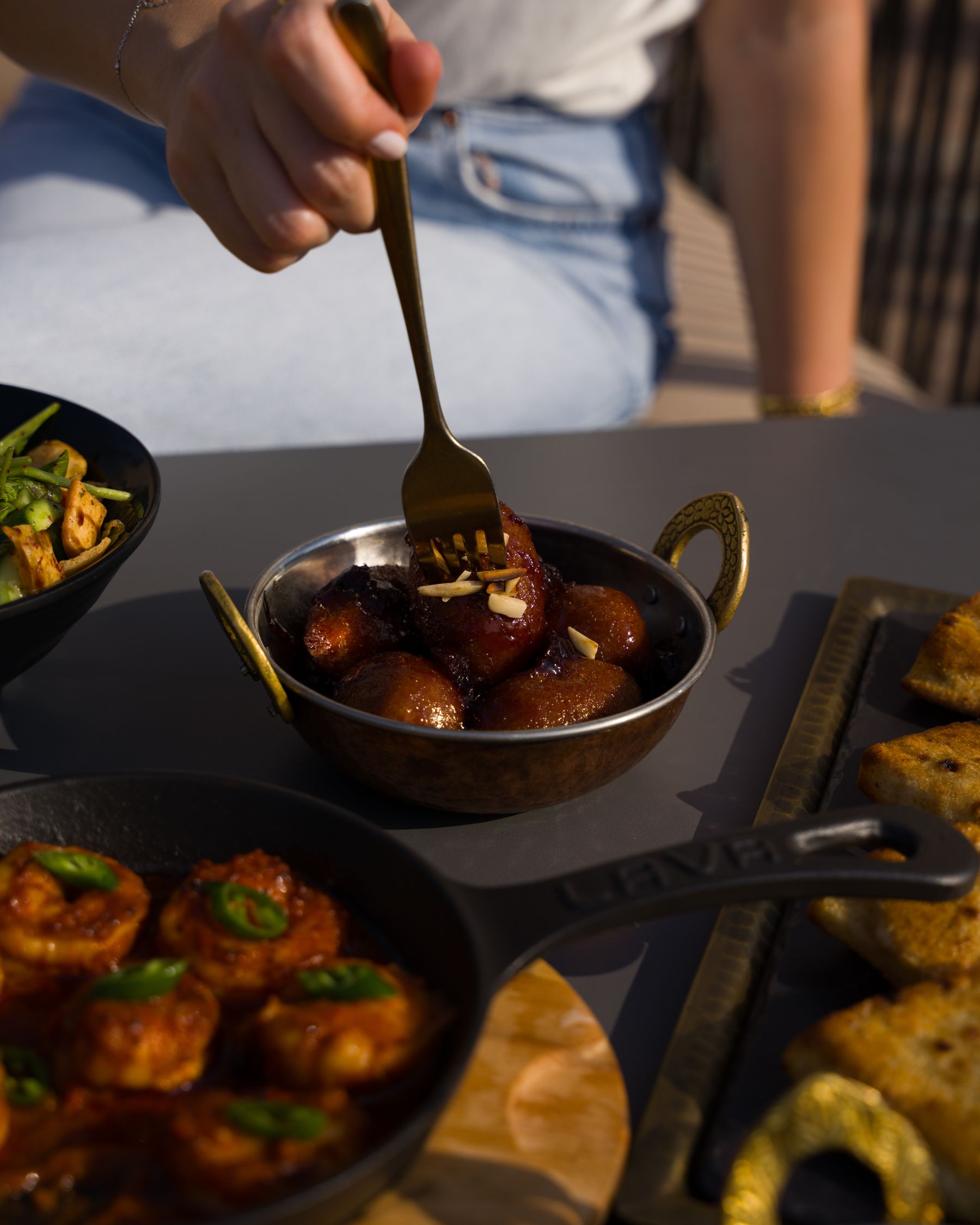
Use the room, stations and food presentation together: polished buffet architecture, chef-led counters, bright chutneys, hot breads, layered rice dishes and desserts that carry the same visual energy as the wedding itself.
Different event. Different pace. Different menu.
Select an event to see how the catering can change across a typical Indian wedding celebration. Your exact lineup may be completely different, and that is the point.
Mehndi / Haldi
Keep the first events energetic and low-friction. Food should be easy to carry, quick to replenish and not so heavy that guests are finished before the weekend begins.
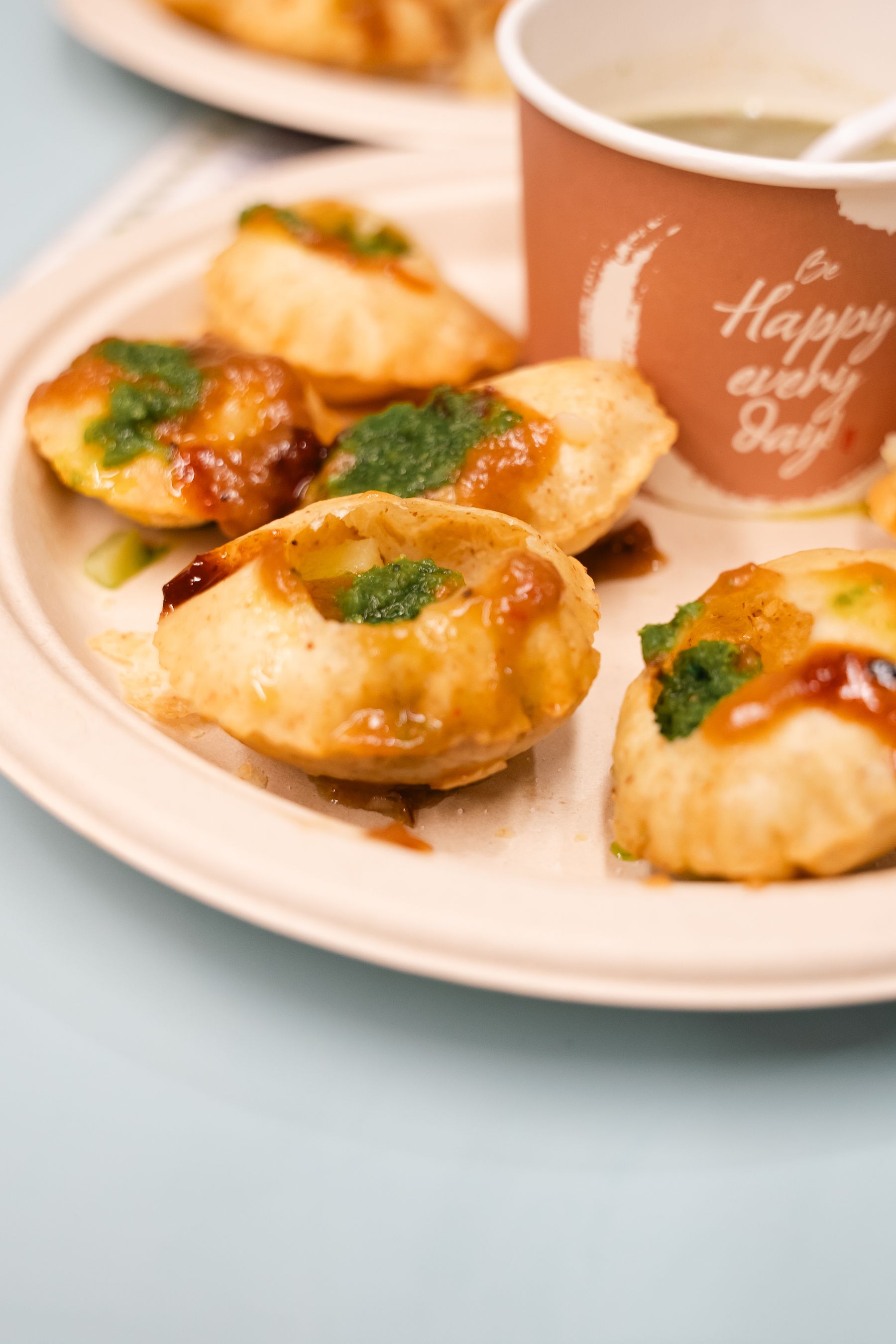
- Chaat, bhel, dahi puri or aloo tikki
- Mini kebabs, paneer bites or samosa variations
- Chaas, nimbu pani, lassi or fruit-forward drinks
- One warm comfort dish for family staying through the event
Sangeet / Garba
This is where stations make sense. Guests are moving between performances, the dance floor and food, so several compact experiences often work better than one long buffet.
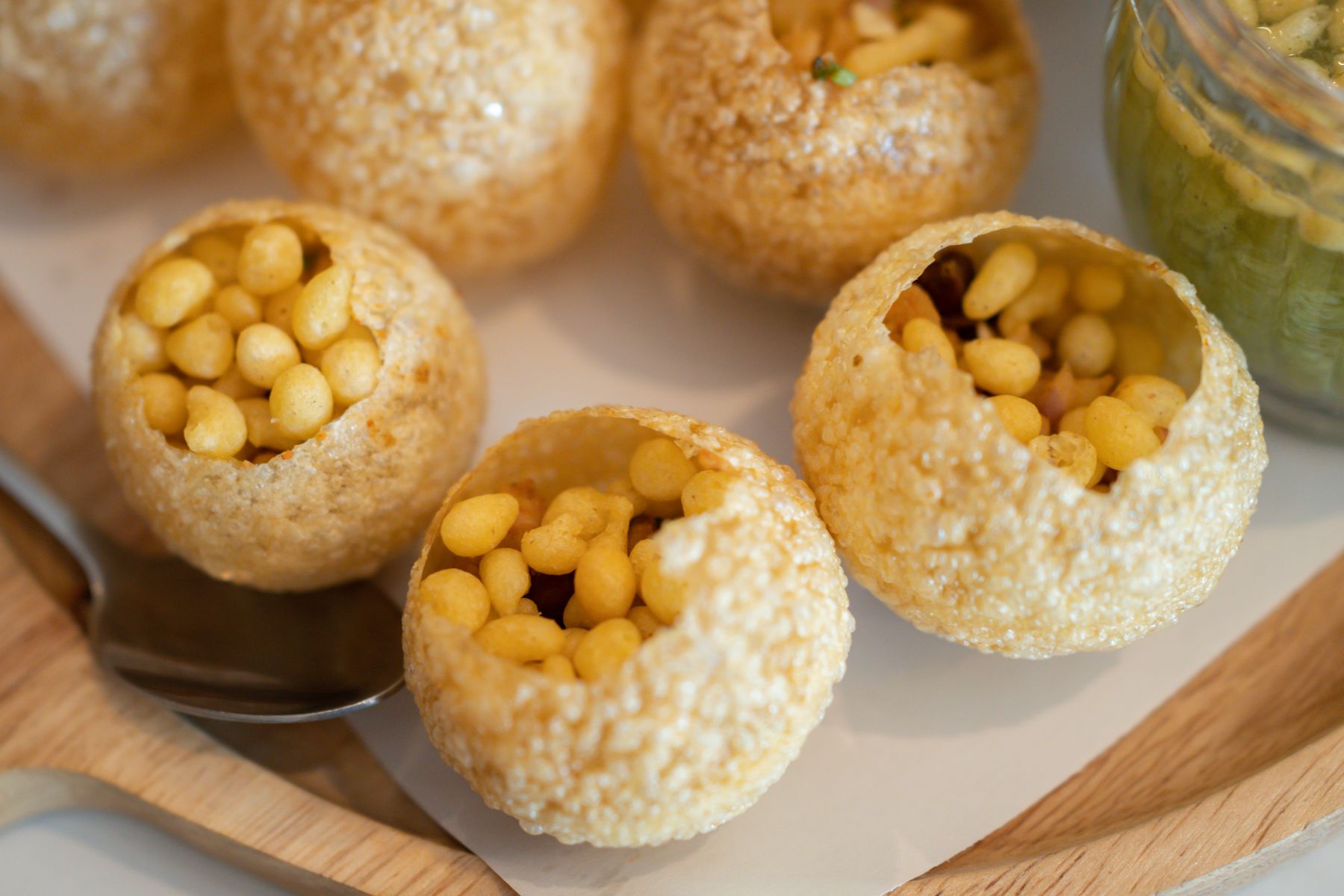
- Pani puri or chaat counter
- Tandoori grill or fresh naan station
- Indo-Chinese: chili paneer, Manchurian, Hakka noodles
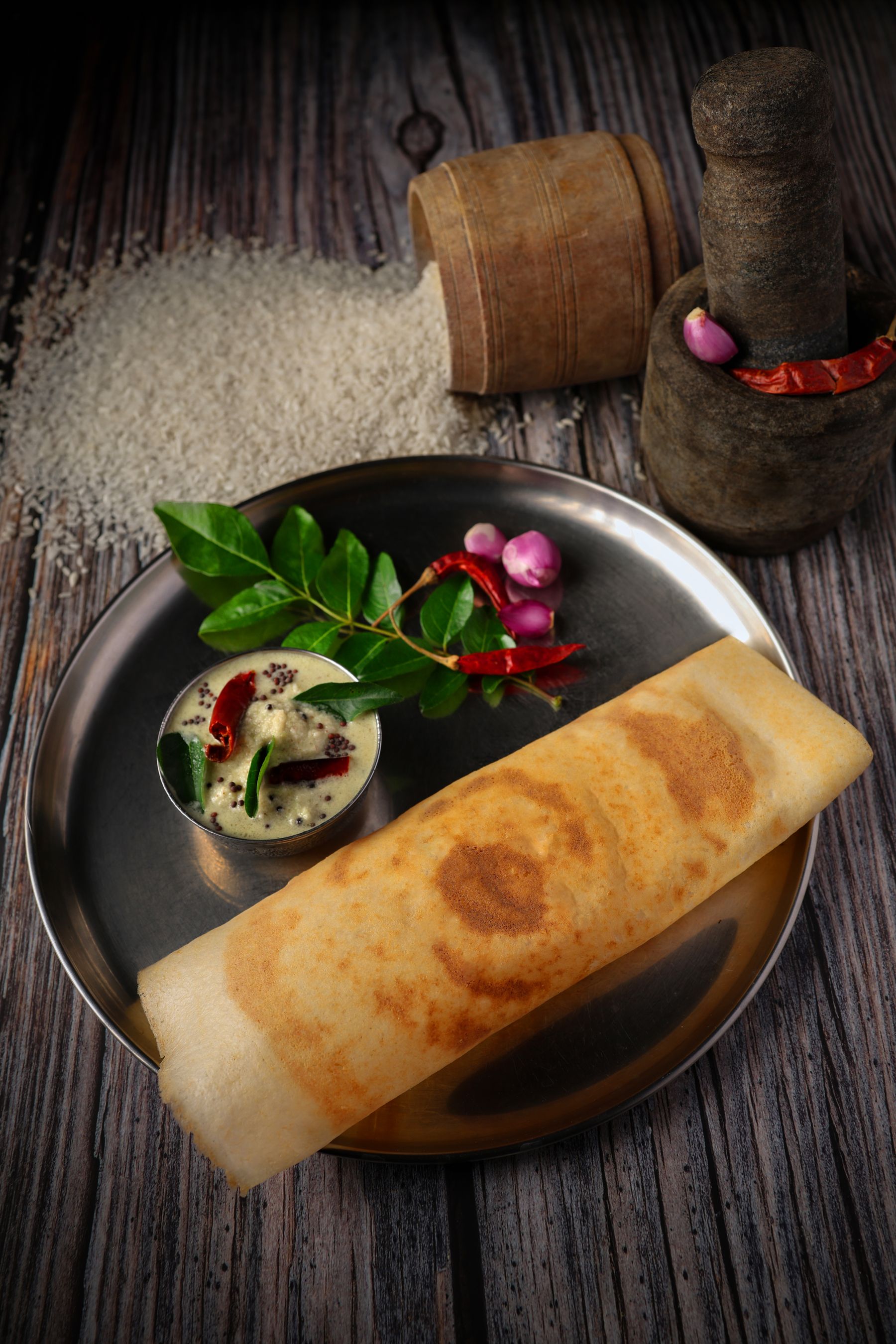
- Dosa or street-food station for a different texture
- Live jalebi or kulfi for dessert
Ceremony Meal
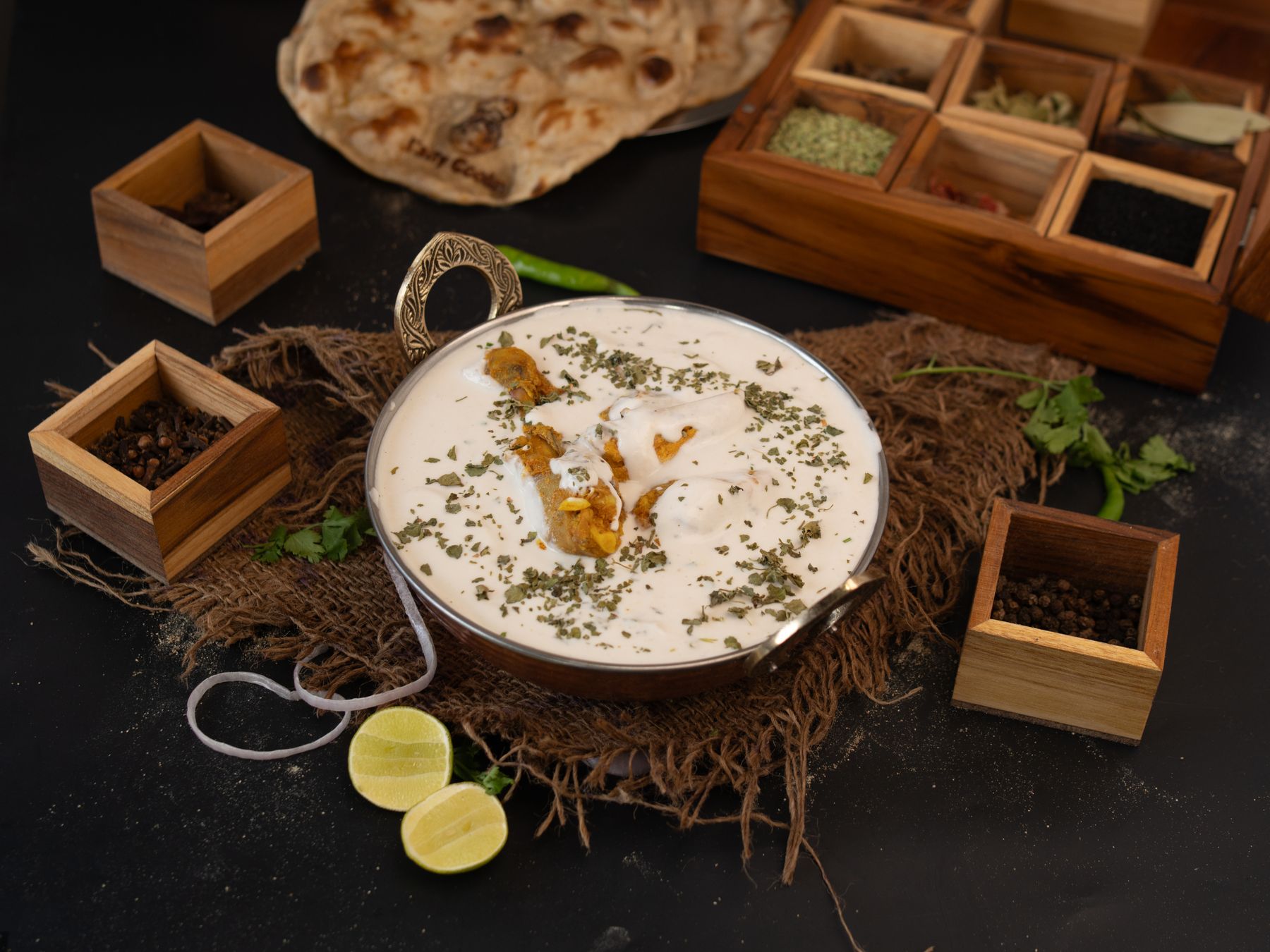
Lunch after the ceremony can be the most traditional meal of the weekend. This is a strong place to lean into the family’s regional food rather than repeating the reception menu.
- Gujarati, Punjabi, South Indian or family-specific lunch
- Vegetarian and Jain planning when required
- Rice, dal, vegetables, breads or banana-leaf service depending on tradition
- Tea, coffee, chaas or lassi after the meal
Cocktail Hour
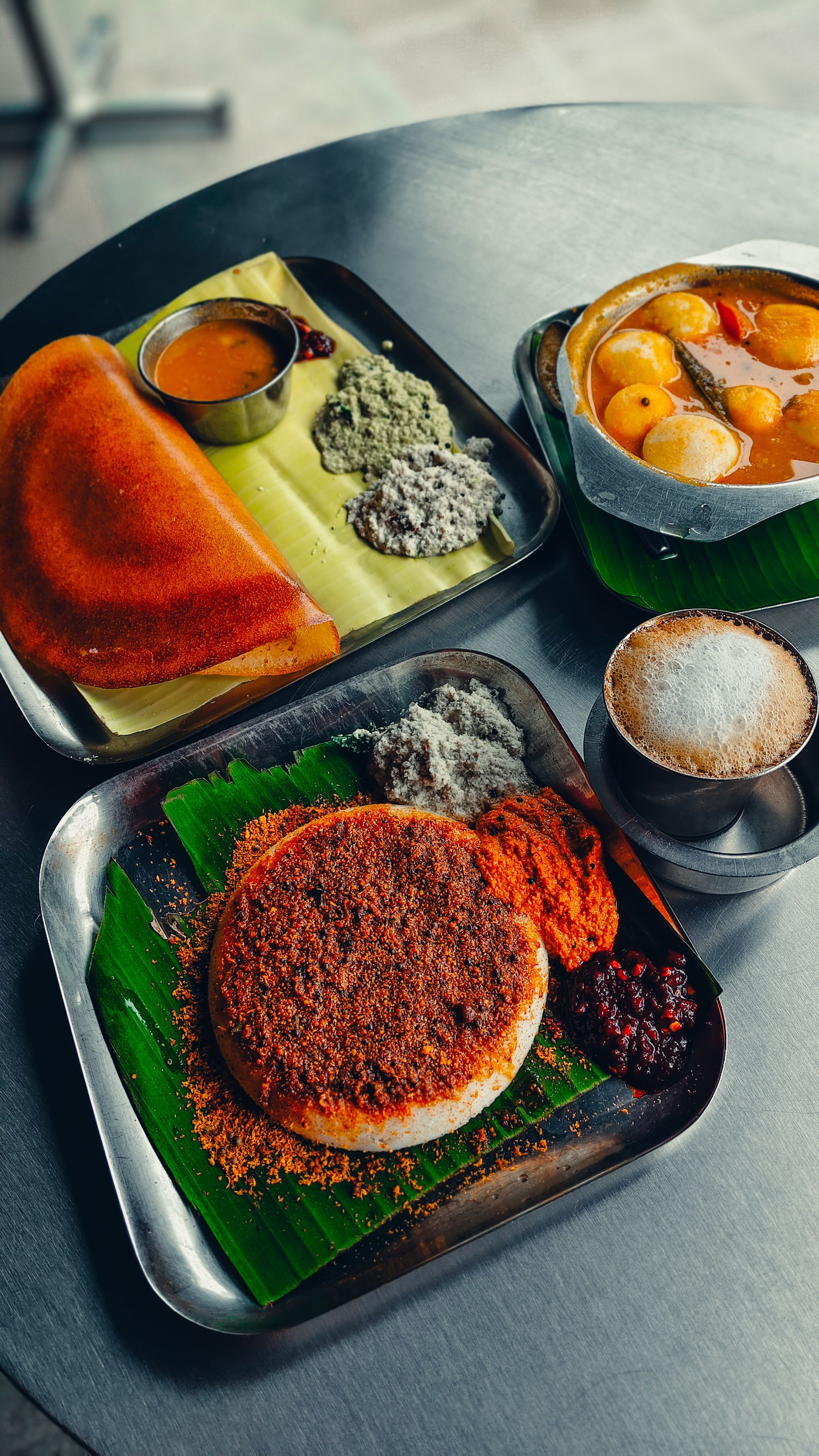
Use cocktail hour for the food that is most fun to eat in small portions. Contrast matters: one crisp bite, one smoky bite and one cooling or tangy bite can do more than six similar appetizers.
- Paneer tikka, chicken tikka or seekh kebab
- Pani puri, papdi chaat or bhel
- Mini kathi rolls or stuffed kulcha bites
- Vegetarian and non-vegetarian trays clearly separated
Reception Dinner
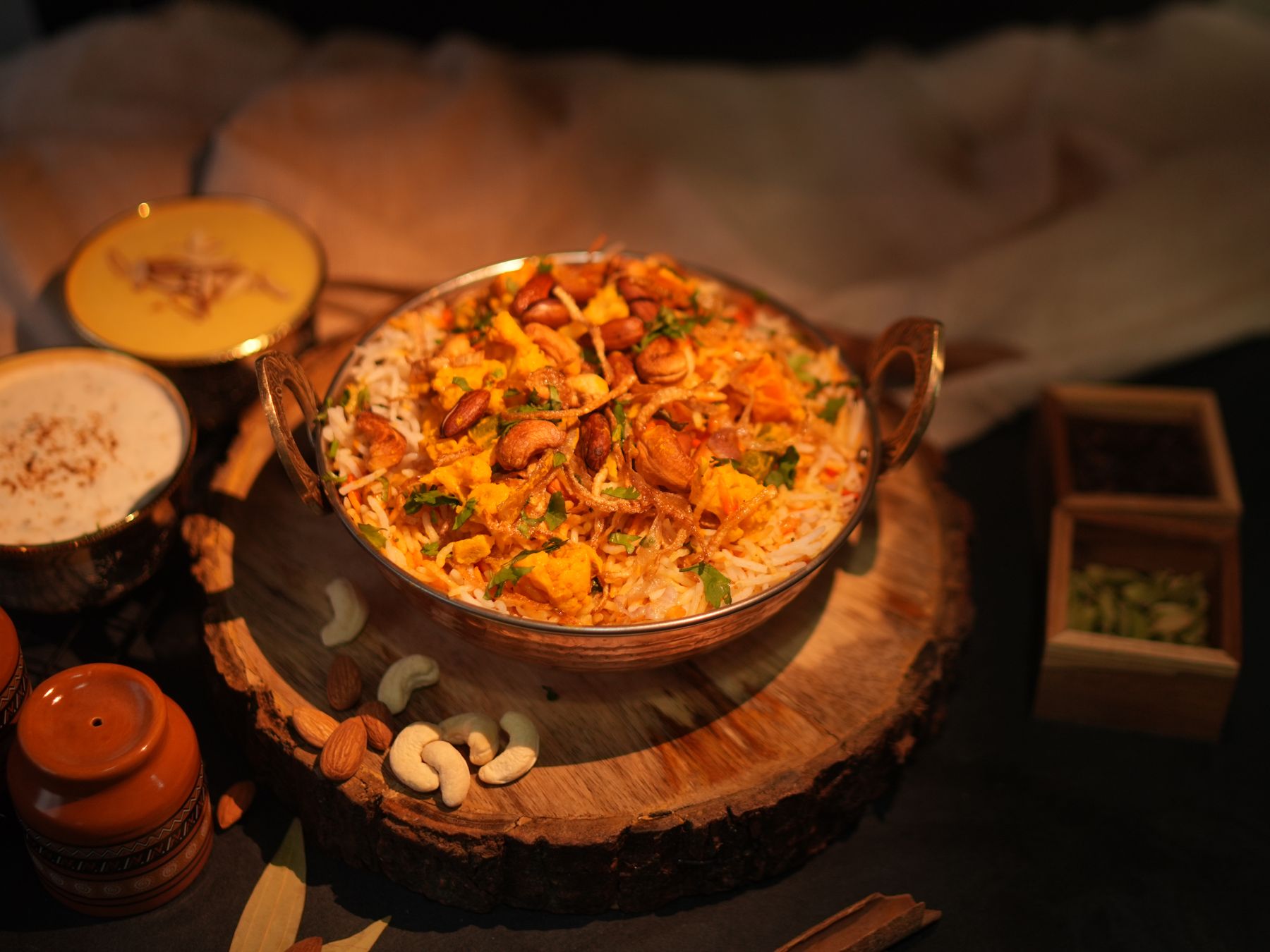
The reception menu should feel complete without reading like a catering encyclopedia. Choose a clear regional direction, strong vegetarian coverage and enough service points for the guest count.
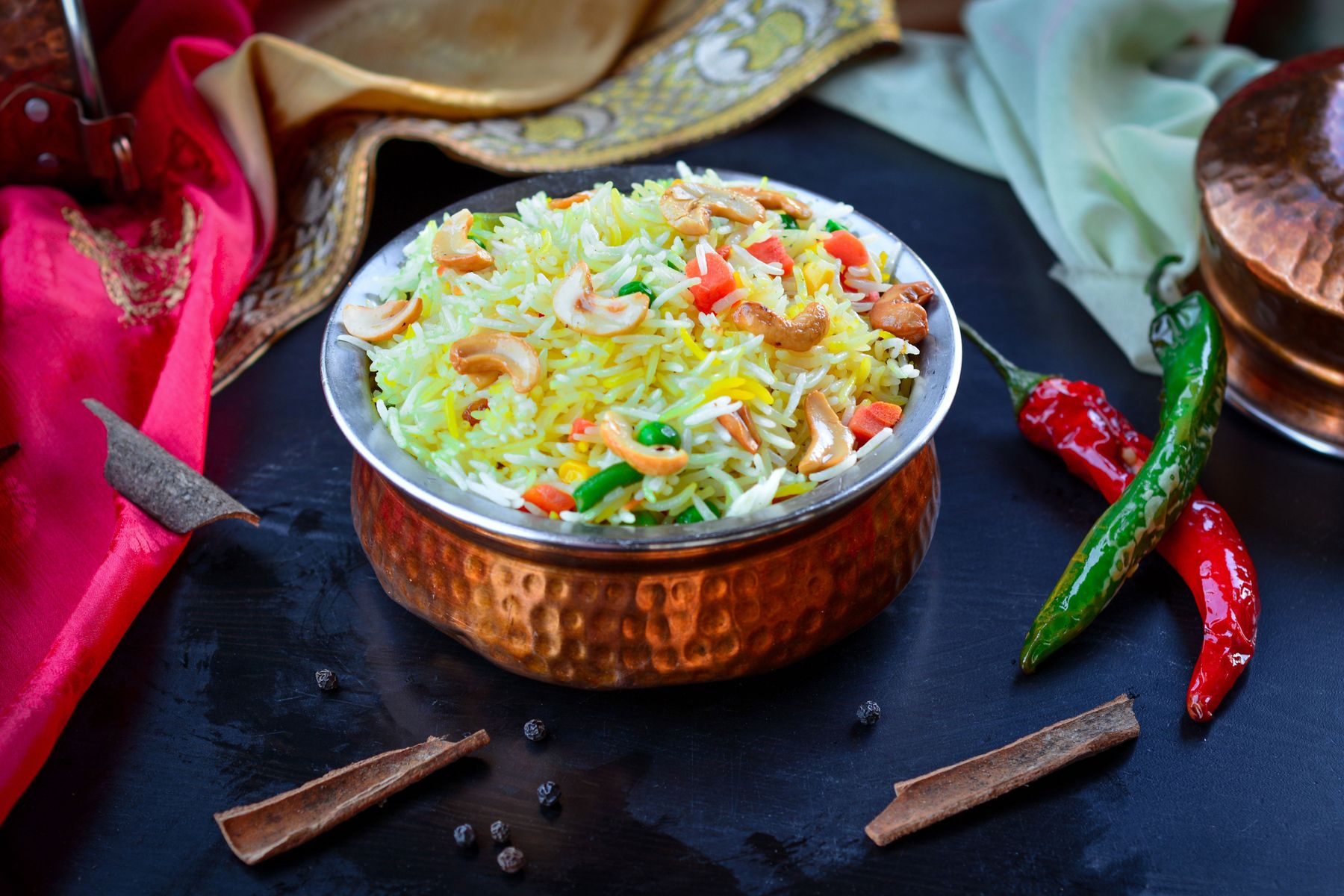
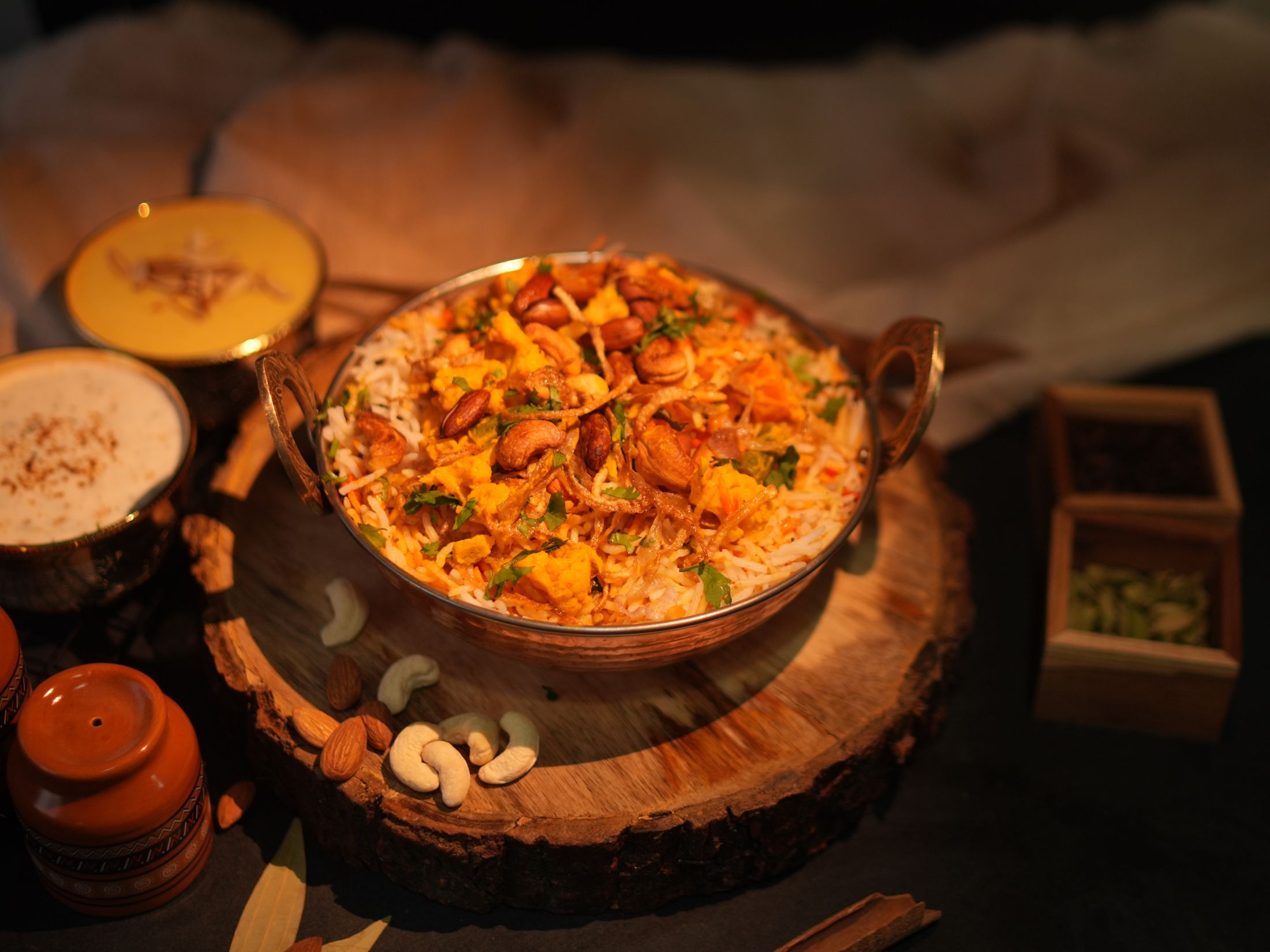
- One signature rice: biryani, pulao or regional rice
- Paneer or vegetable centerpiece plus dal
- One or two meat entrées if desired
- Fresh breads only if the venue and kitchen plan support them
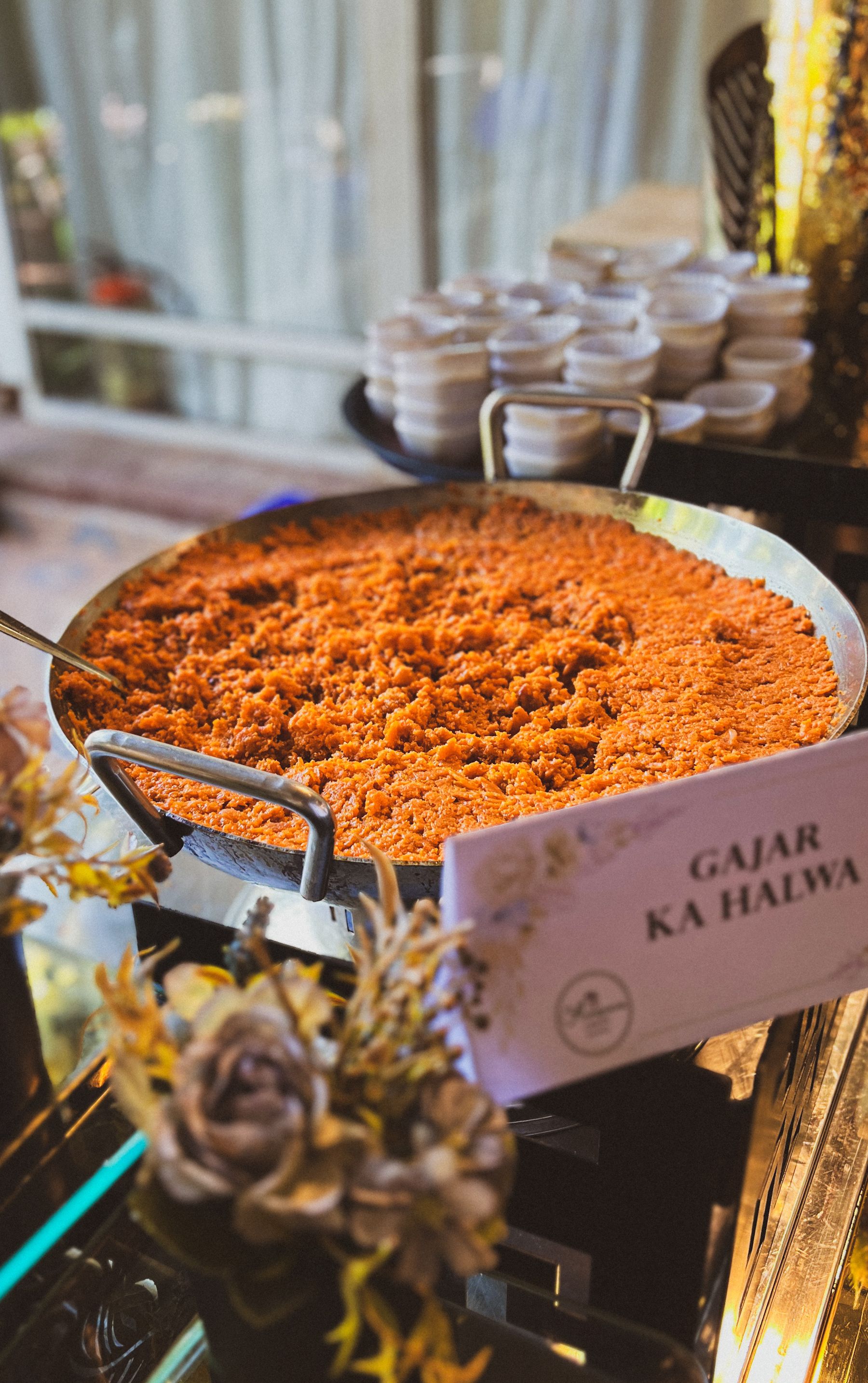
- Two desserts with different textures rather than a crowded sweet table
Late Night
After hours of dancing, a compact late-night menu usually lands better than reopening dinner. Choose food that is recognizable at a glance and easy to serve in short waves.
- Masala chai with biscuits or mithai
- Pav bhaji, kathi rolls or mini sliders with Indian flavors
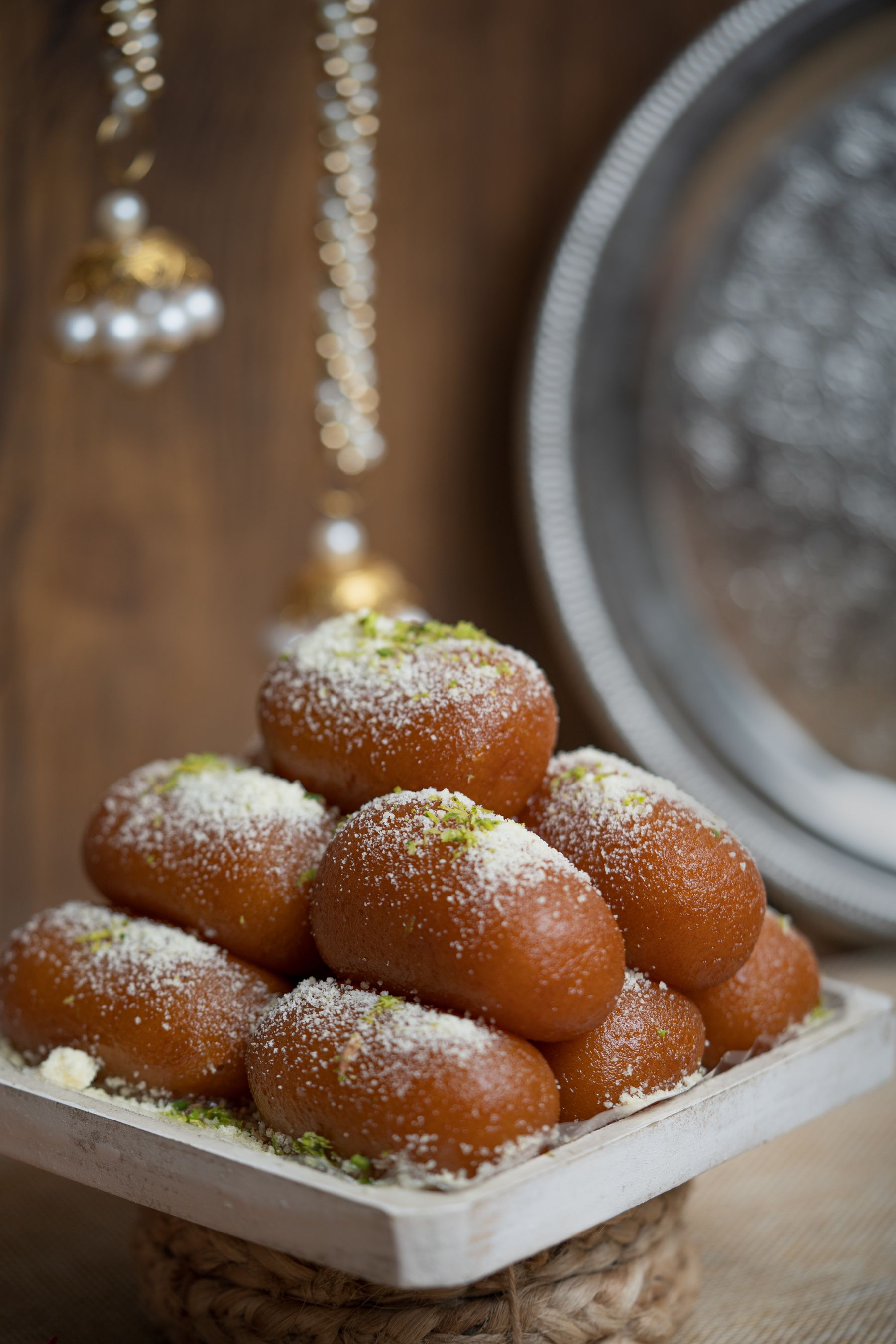
- Fresh jalebi with rabri
- Kulfi or a compact dessert cart
There is no single “Indian wedding menu.”
The family’s region, religion, dietary practice and favorite foods matter more than a generic banquet template. These are menu directions, not rules.
Smoke, richness and breads.
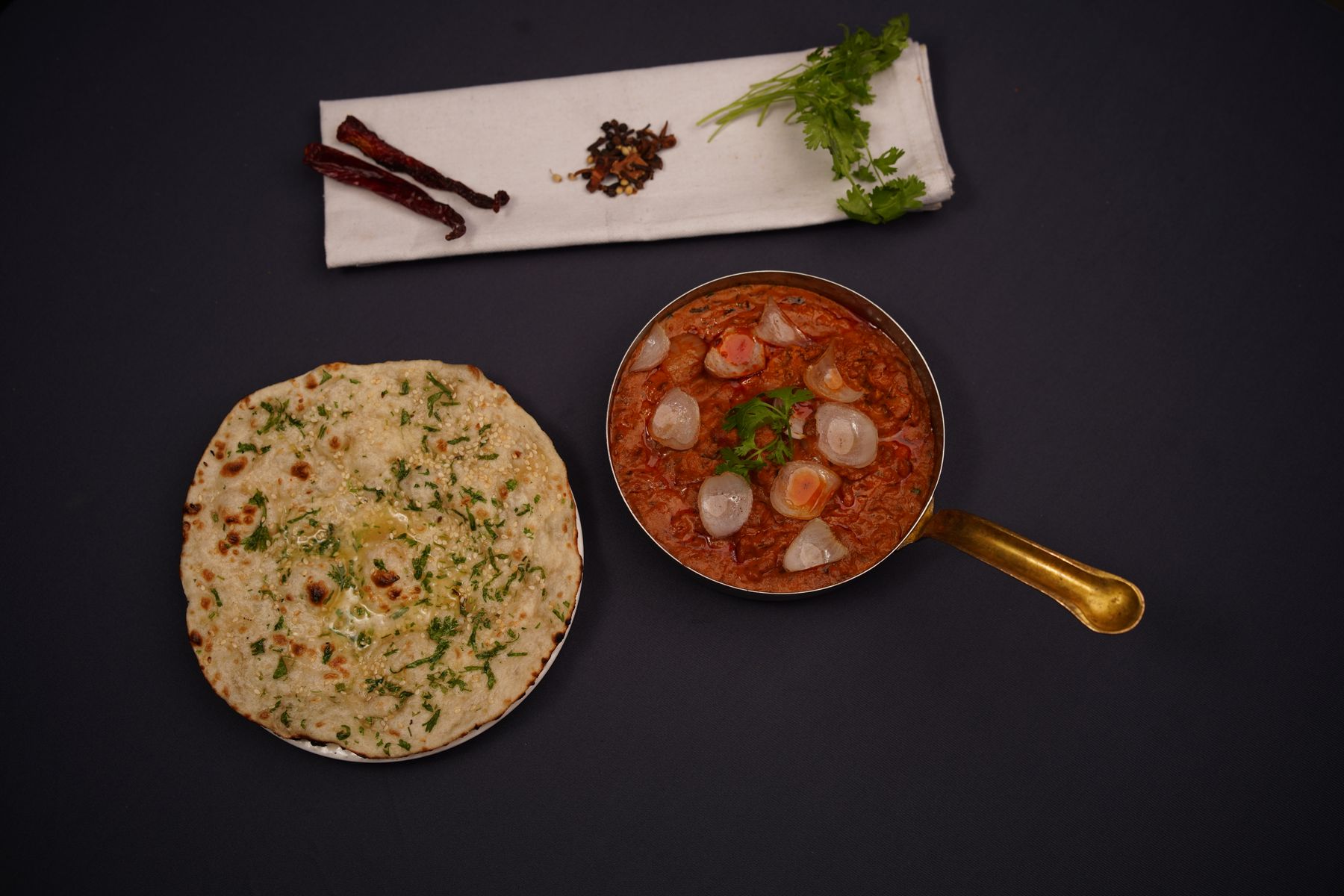
A strong fit for tandoor, kebabs, paneer, dal and layered rice dishes, with breads served as fresh as the venue allows.
Sweet, savory, tangy, varied.
Gujarati wedding food can move from farsan and chaat into a vegetable-forward meal, and many families require vegetarian or Jain-friendly planning.
Rice, lentils, coconut, live griddles.
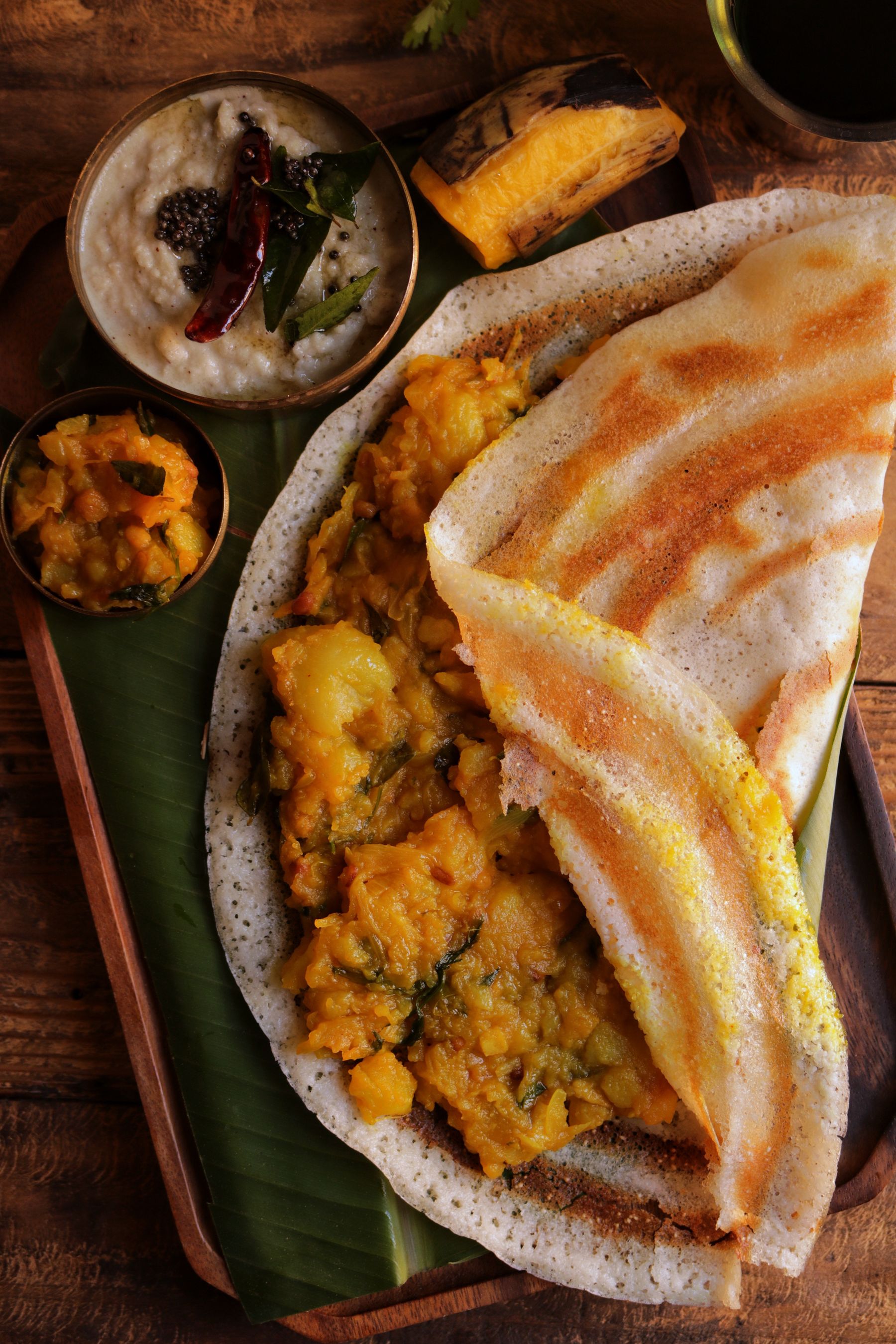
Tamil, Telugu, Kannada and Malayali families each have their own expectations. Dosa and other chef-led stations can be a major draw when properly staffed.
Deep regional character.
When the family wants a distinctly Rajasthani or Marwari meal, build around the dishes they actually recognize instead of adding one token regional item.
A wedding favorite, not an afterthought.
Especially strong for sangeet or cocktail hour because it is fast, familiar and easy to build into stations with strong vegetarian coverage.
One menu, two families.
Indian-American, Indian-Persian, Indian-Jewish and other mixed-culture weddings work best when the cuisines are connected through courses or stations, not split into two unrelated buffets.
A station is only special when it is actually fresh.
A live counter should improve the food, not just decorate the room. Pani puri should be assembled to order so it stays crisp. Dosa needs enough griddles and chefs to prevent a twenty-minute queue. Tandoori items and naan need a venue-approved cooking plan, ventilation and a realistic replenishment route.
For large weddings, we may recommend duplicating the most popular station instead of adding more menu concepts. Two efficient chaat counters are often better than one beautiful counter with fifty people waiting.
Venue fire code, open-flame rules, outdoor cooking locations and equipment permissions must be confirmed before promising any live station.
Six stations guests will actually use.
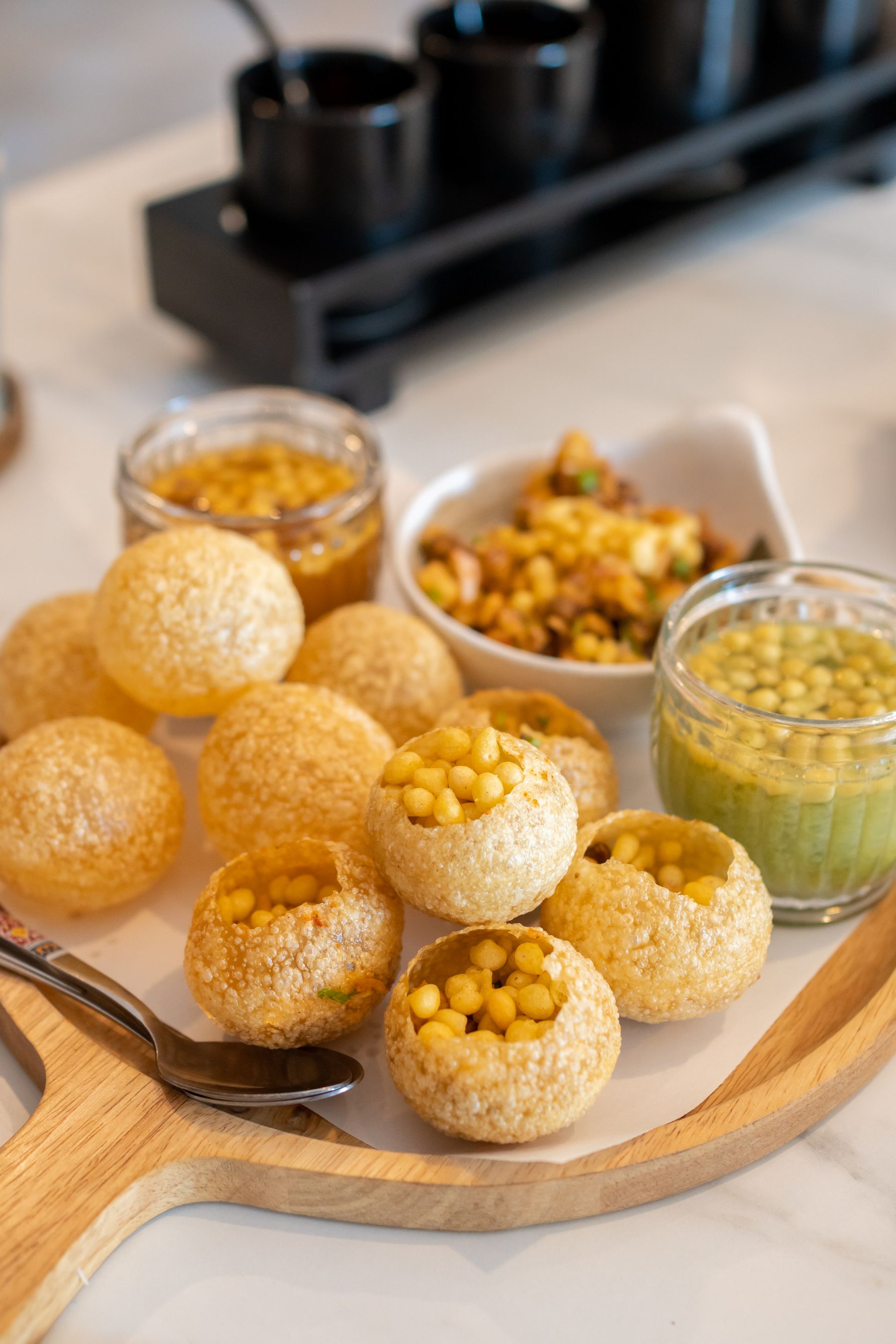
Pani Puri + Chaat Bar
Pani puri, papdi chaat, bhel or aloo tikki assembled to order with chutneys and toppings.
Best for: mehndi, sangeet, cocktail hour.Fresh Naan + Tikka
Hot breads and skewers give the room aroma and theater that pre-held trays cannot recreate.
Best for: sangeet, cocktail hour, reception buffet.Dosa Counter
Dosa cooked to order with chutneys, sambar and fillings, staffed to match the guest count.
Best for: breakfast, lunch, sangeet, late night.Wok Station
Chili paneer, Manchurian, noodles or fried rice finished hot instead of sitting too long in chafers.
Best for: sangeet, garba, cocktail hour.Fresh Jalebi + Rabri
Hot jalebi against cool rabri creates a much stronger finish than another tray of room-temperature dessert.
Best for: reception, late night, farewell brunch.Chai, Lassi + Nimbu Pani
Build a non-alcoholic hospitality moment into the event rather than treating beverages as an afterthought.
Best for: ceremony, lunch, mehndi, post-dinner.Four strong starting points. Then make one yours.
Choose service around the guest flow.
The best menu still fails when 300 people are sent toward one narrow buffet.
Mirrored buffet
A strong choice for large receptions. Duplicate popular dishes so both sides of the room move at the same pace.
Stations
Ideal for chaat, dosa, tandoor and Indo-Chinese. Each station needs its own staffing and equipment plan.
Plated
Useful for a formal ballroom dinner when the menu is intentionally edited and the venue can execute synchronized service.
Hybrid
Passed or station-based appetizers, then buffet or plated dinner. Often the most flexible format for Indian receptions.
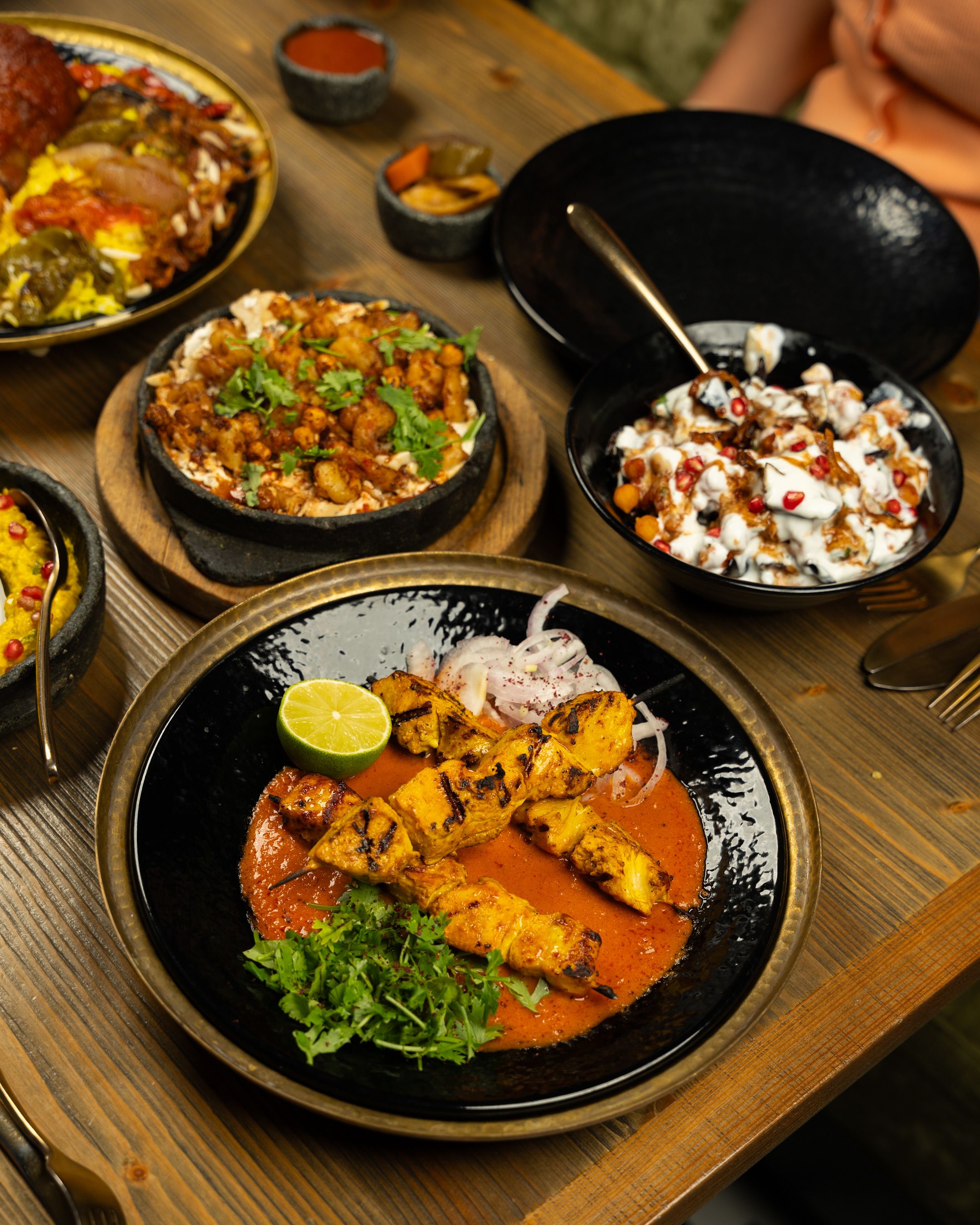
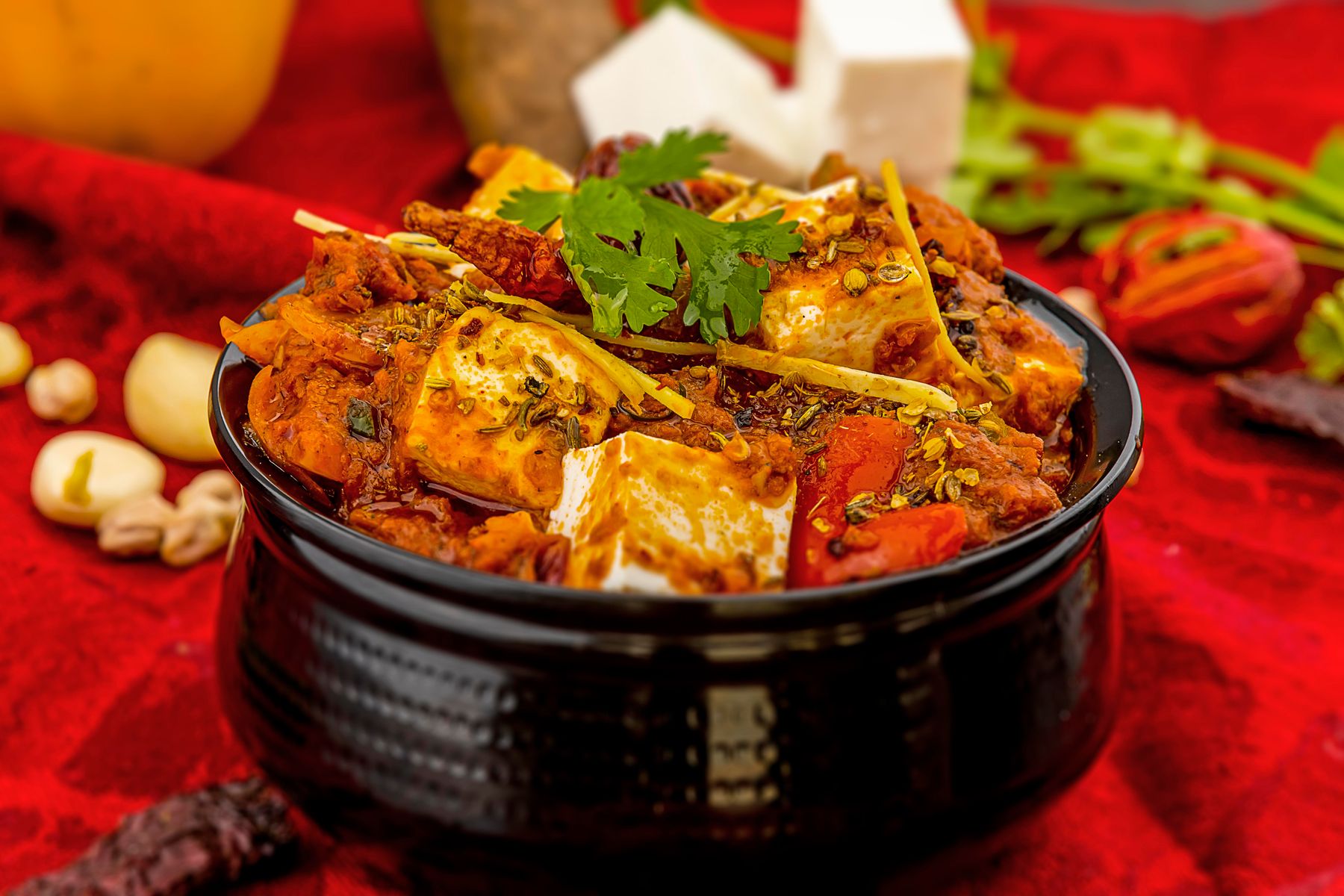
Crisp. Smoky. Creamy. Fragrant. Sweet. Not six versions of the same bite.
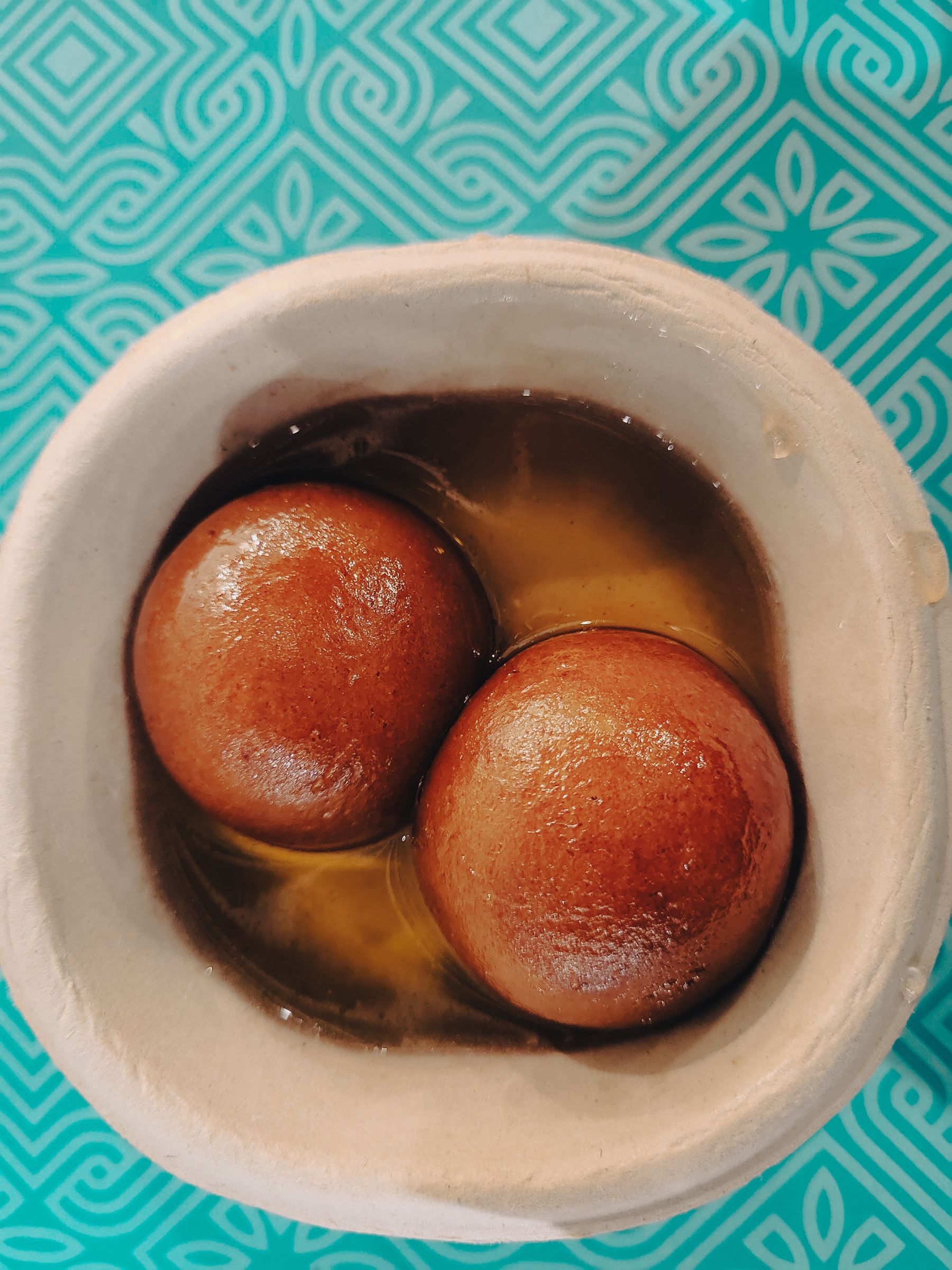
“Vegetarian” is not the same as Jain.
Ask the family for exact requirements before the tasting, not one week before the wedding.
- Vegetarian and vegan selections that are complete meals, not side dishes
- Jain menus built to the family’s exact standard and preparation expectations
- Halal sourcing confirmed in advance when required
- Nut and dairy awareness for gravies, desserts and garnishes
- Clear buffet labels and service-team briefing
Ingredients are only half the question.
For strict requirements, ask how the kitchen actually handles the food.
- Separate utensils, pans or fryers when the standard requires it
- Separate vegetarian and non-vegetarian holding and serving areas
- Dedicated labels for Jain, vegan, gluten-conscious and allergy-sensitive items
- Halal meat supplier and handling confirmation
- Nut cross-contact reviewed for guests with severe allergies
Five events cannot feel like the same buffet five times.
A wedding weekend needs one food strategy across multiple rooms, timelines and guest counts. The families may want a casual home-style meal after arrivals, a high-energy station dinner at sangeet, a more traditional ceremony lunch, then the largest service team of the weekend for the reception.
We look at each event separately: how long guests will be there, what they ate earlier, whether people will be seated or moving, how far the kitchen is from the room, which items must be cooked live and what can be prepared off-site without losing quality.
Before you sign the venue
Can the venue actually support Indian wedding catering?
“Outside catering allowed” is only the first answer. Ask where live cooking can happen, whether a tandoor is permitted, how much refrigeration and hot holding exists, and how food moves from the kitchen to a ballroom full of guests.
Outside caterer approval
Ask the venueCan we bring our preferred Indian caterer? Confirm approved-vendor rules, outside-catering fees, insurance, kitchen charges and document deadlines in writing.
Tandoor + open flame
Ask the venueCan a tandoor, grill or live burner be used, and where? Indoor prohibition does not always mean outdoor cooking is permitted. Fire-marshal and venue rules need to match the proposed station.
A real working kitchen
Ask the venueIs the kitchen built for cooking or only plating? Verify prep space, sinks, refrigeration, warming capacity, electrical power and room for multiple catering teams during a multi-event weekend.
Route to the ballroom
Ask the venueWalk loading area to kitchen to reception floor. Long corridors, shared elevators and stairs change how many servers and hot-holding carts the dinner actually needs.
Buffet + station footprint
Ask the venueMark every buffet and live counter on the floor plan before finalizing the menu. A station that looks perfect on Pinterest may block a fire lane or steal space from the dance floor.
Multiple event resets
Ask the venueIf the venue hosts your sangeet, ceremony and reception, confirm load-in windows, overnight storage, kitchen access and whether catering equipment can remain between events.
Useful test: if the venue cannot answer these questions clearly, schedule a call with the venue manager and caterer before the contract becomes nonrefundable.
Indian wedding catering across LA, Orange County & San Diego.
Ballrooms, luxury hotels, resorts, estates, cultural venues and private properties throughout Southern California.
Los Angeles
Indian catering for large hotel weddings, cultural venues, estates and private events throughout Los Angeles County.
Orange County
Multi-day Indian wedding catering for coastal resorts, ballrooms and private venues across Orange County.
San Diego
Indian wedding catering from city hotels to North County resorts and coastal properties.
Budget the service, not just the food.
For Indian weddings, the same guest count can price very differently depending on live stations, staffing, regional menu complexity, rentals and whether you are catering one event or an entire weekend.
A practical Southern California planning range for many full-service Indian wedding packages. Simpler food-only or drop-off service can be lower; premium proteins, multiple live stations, plated service, rentals and larger service teams can push the number higher.
- Guest count
- Number of events
- Menu breadth
- Regional complexity
- Live stations
- Service style
- Servers + chefs
- Venue kitchen access
- China + glassware
- Travel + load-in
- Dietary protocols
- Late-night service
Planning range only. Final pricing depends on the caterer, date, venue, menu and full event scope.
A cleaner way to book Indian catering.
Send the weekend brief
Date, venue, events, guest counts, family background and dietary requirements.
Map each event
Decide which events need traditional meals, stations, lighter food or formal dinner service.
Build the menu
Choose regional direction, signature dishes, live counters and dietary protocols.
Confirm the venue plan
Kitchen, load-in, cooking rules, staffing, rentals, floor plan and fire-safety requirements.
Coordinate service
Every meal is aligned with the ceremony, performances and dance floor so food supports the timeline.
Before you request a quote.
What food is typically served at an Indian wedding?
There is no single standard menu. The best menus reflect the family’s region and events. Common choices can include chaat, tandoori appetizers, paneer, dal, vegetable curries, biryani or pulao, breads, South Indian items, Indo-Chinese dishes, mithai and live stations.
Can you cater the mehndi, sangeet, ceremony and reception?
Yes. Multi-event catering is often the best way to keep the food program cohesive while still giving each event a different personality. Guest count and venue may change from event to event, so each meal should be scoped separately.
Can you provide Jain wedding catering?
Yes, when the exact family standard is defined in advance. Jain requirements vary, so confirm prohibited ingredients, preparation methods, equipment expectations and how the food should be labeled and served.
Can you arrange halal Indian wedding catering?
Yes. Tell us the exact sourcing and handling standard your family requires so the catering partner can be matched appropriately and the details can be confirmed before booking.
Can we have live chaat, dosa, naan or tandoor stations?
Often, yes, but the venue must approve the equipment, cooking location, power or fuel requirements and fire-safety plan. Live stations also need enough chefs to keep wait times reasonable for the guest count.
How much does Indian wedding catering cost?
For full-service Southern California weddings, roughly $70–$200+ per guest is a useful planning range for many packages. Simpler drop-off service may be lower, while multiple live stations, premium ingredients, rentals and heavy staffing can cost more.
Can you combine Indian food with another cuisine?
Yes. Multicultural menus usually work best when the cuisines are assigned to different courses, stations or events rather than building two unrelated buffets side by side.
Do you serve Los Angeles, Orange County and San Diego?
Yes. Wedding Caterings by Royaal focuses on Southern California, including Los Angeles County, Orange County and San Diego County.
How far ahead should we book?
Popular Saturdays and multi-day weekends should be planned early because the caterer may need enough kitchen staff, station chefs and service teams across several events. If your date is closer, it is still worth asking about availability.
Tell us about the whole weekend. We’ll shape the food around it.
Send the basics once: events, guest counts, venue, family food direction and dietary requirements. We’ll use them to narrow the right catering approach for your celebration.
Indian Wedding Catering · Los Angeles · Orange County · San Diego · Wedding Caterings by Royaal