Arab Wedding Catering
A wedding feast should feel like your family — not a generic “Mediterranean” buffet. Build an Arab wedding menu around the region, traditions and level of hospitality that matter to you, then serve it with the polish of a Southern California wedding.
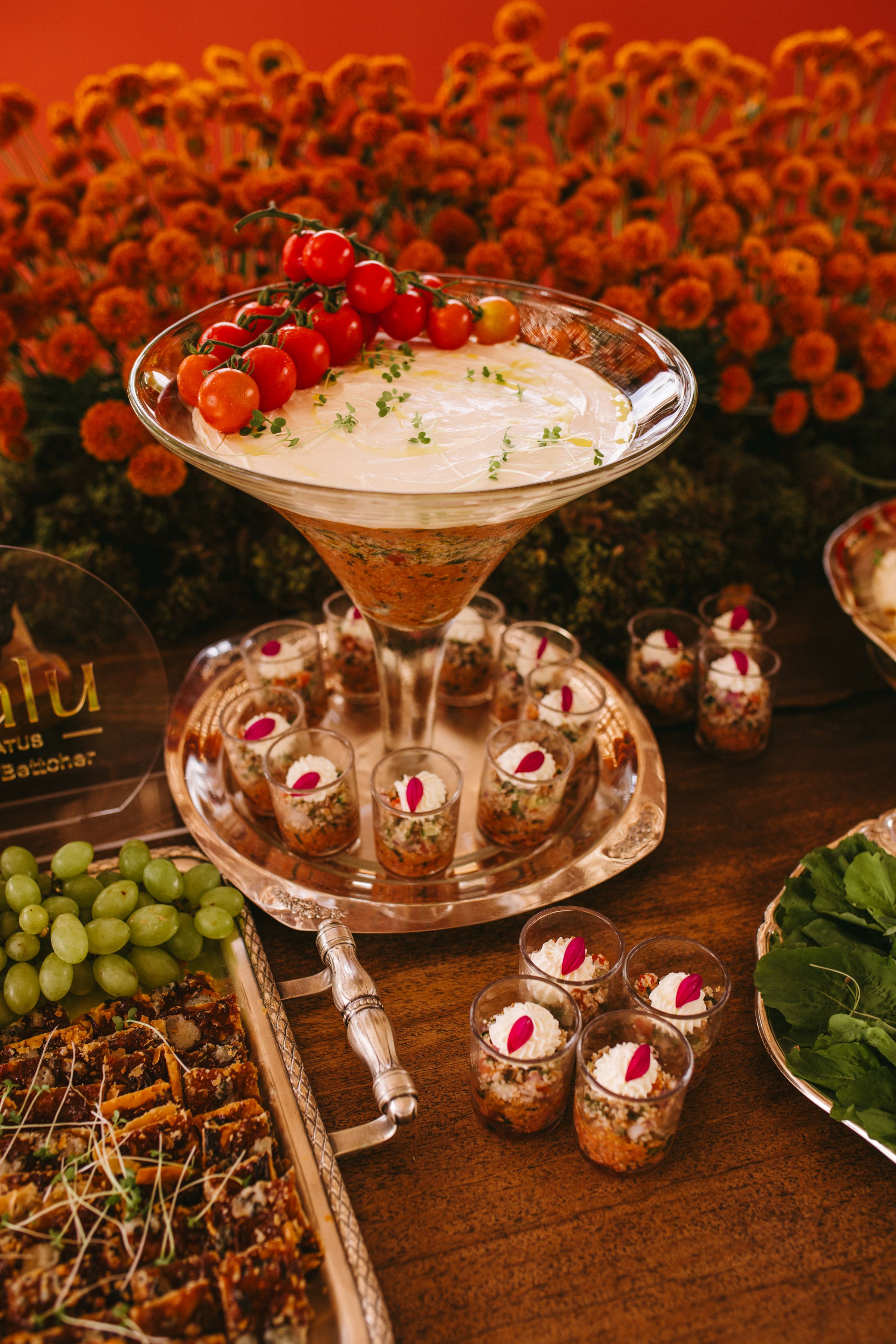
“Arab food” is not one menu.
Lebanese, Palestinian, Jordanian, Syrian, Iraqi, Egyptian and Gulf families can all mean something different when they picture a wedding feast. We start by identifying the table you want to recognize.
What tastes like home?
Start with the family’s country, city or regional food traditions before choosing dishes.
How generous?
Mezze at the table, large-format platters, a buffet, plated dinner, stations or a hybrid.
What standard?
Tell us whether halal or zabiha sourcing, documentation or a fully halal kitchen is required.
What happens after dinner?
Arabic coffee, tea, fruit, baklava, knafeh, maamoul or a full late-night sweets moment.
Hospitality should be visible.
A memorable Arab wedding dinner is rarely about one hero dish. It is the feeling created by the whole table: cold mezze already waiting, warm bread moving quickly, grills arriving hot, rice and slow-cooked dishes in generous quantities, then fruit, sweets and coffee continuing after the plates have been cleared.
The strongest menus also know when to stop. Twelve mezze, four salads, five proteins and three rice dishes may sound impressive on paper, but at scale it can produce slow lines, tired food and a reception timeline that disappears into dinner.
Our approach is to protect the dishes that matter most to the family, then design the service around the venue, guest count and flow of the celebration.
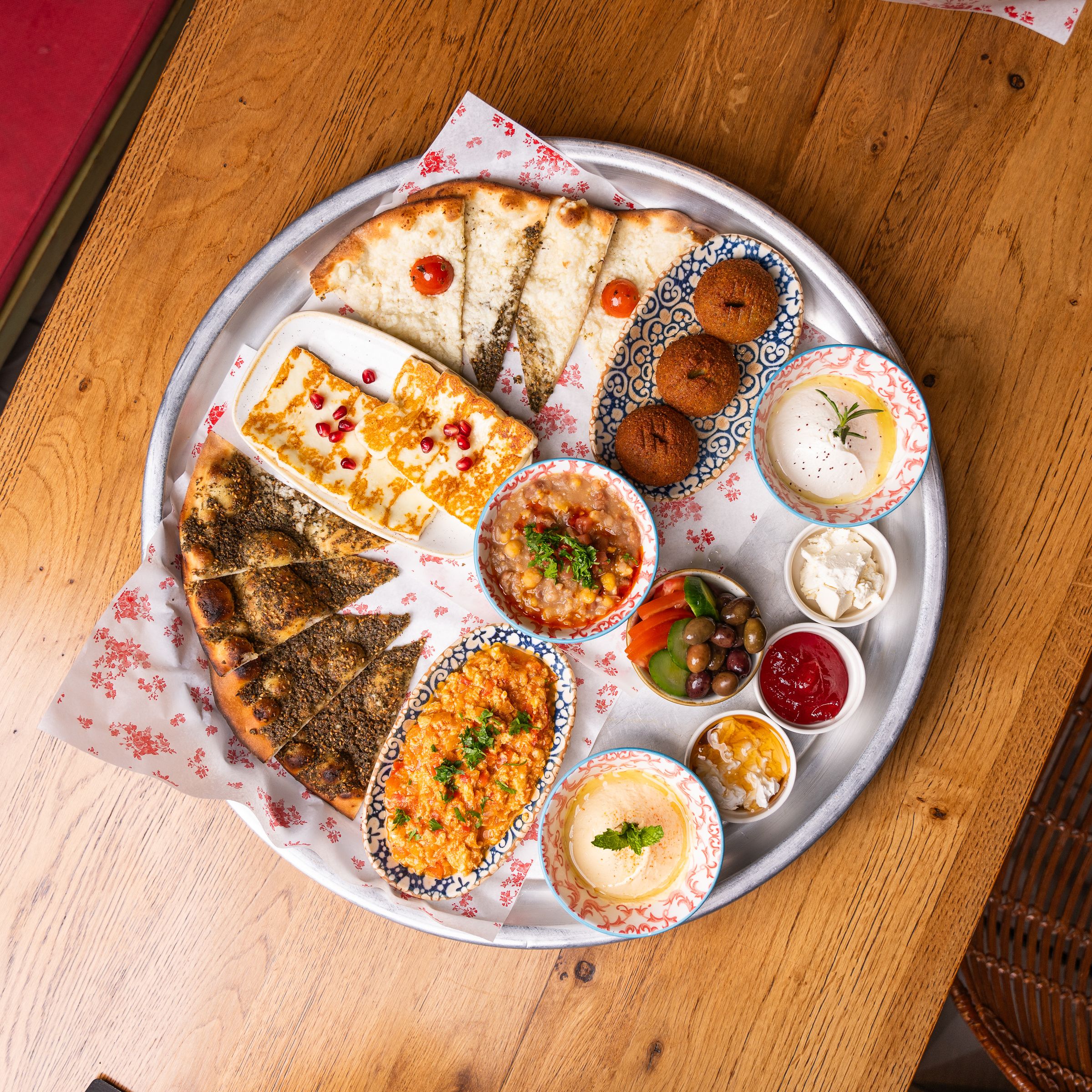 Mezze meant for sharing
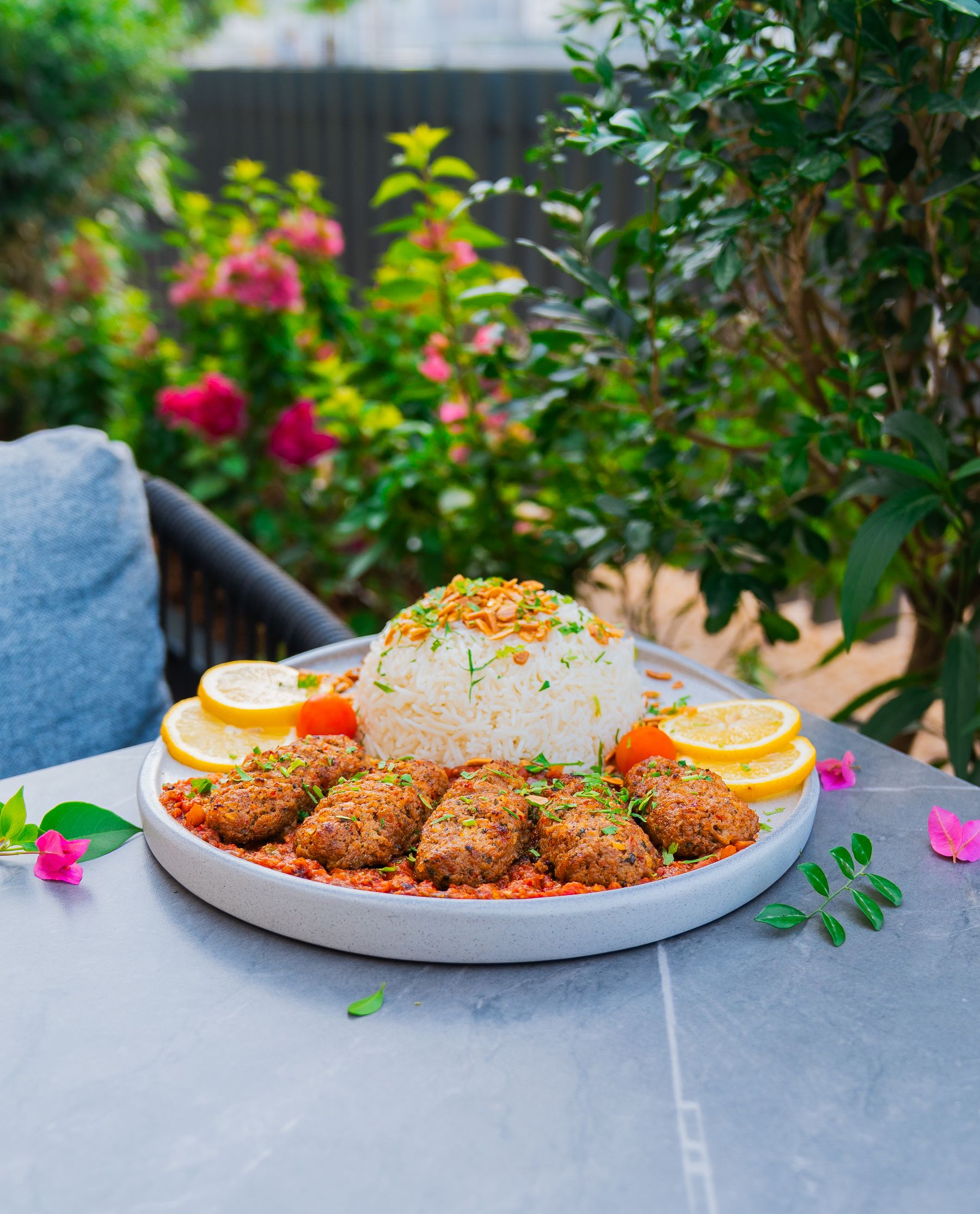 Grills + rice
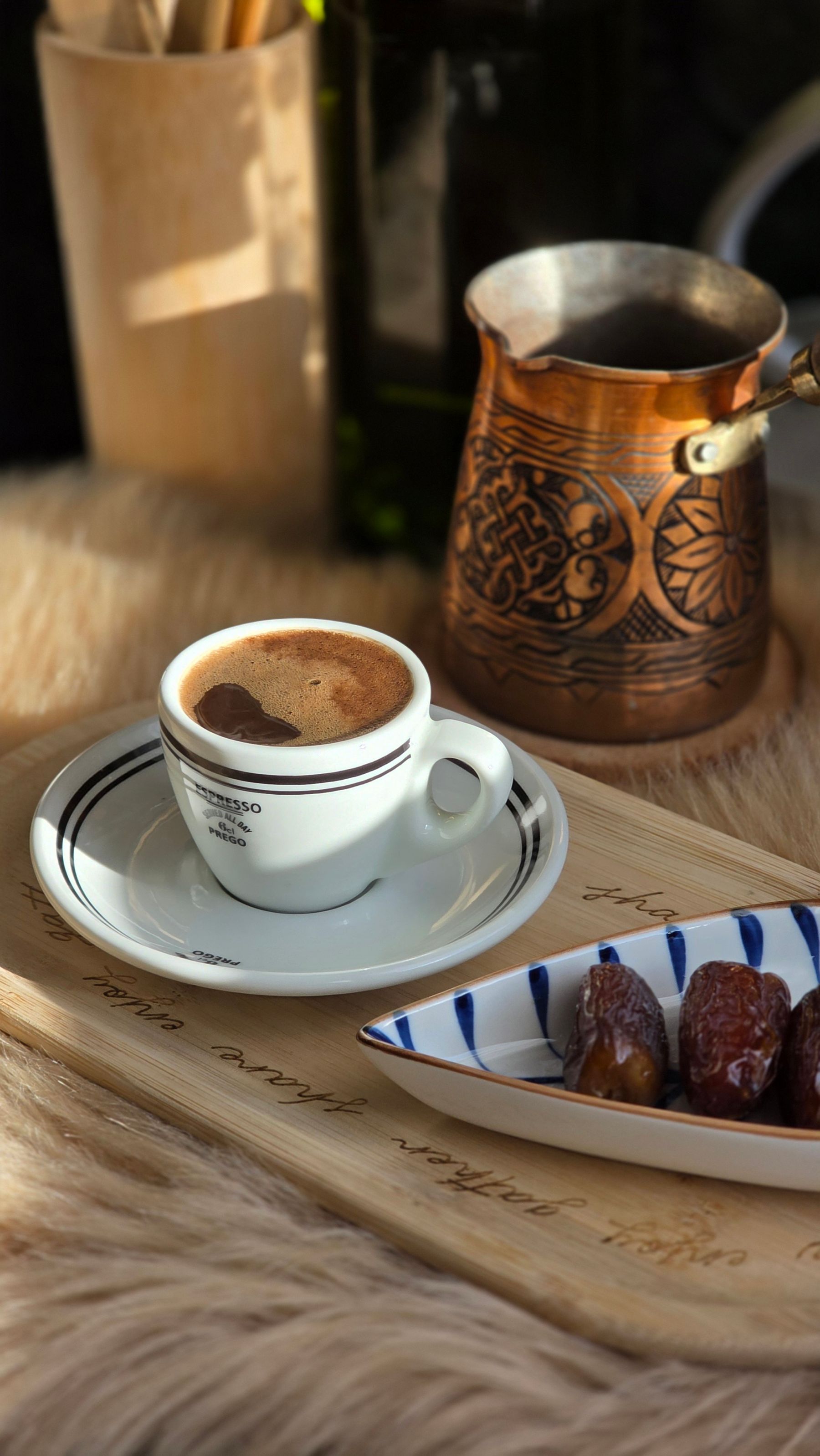 Coffee + dates
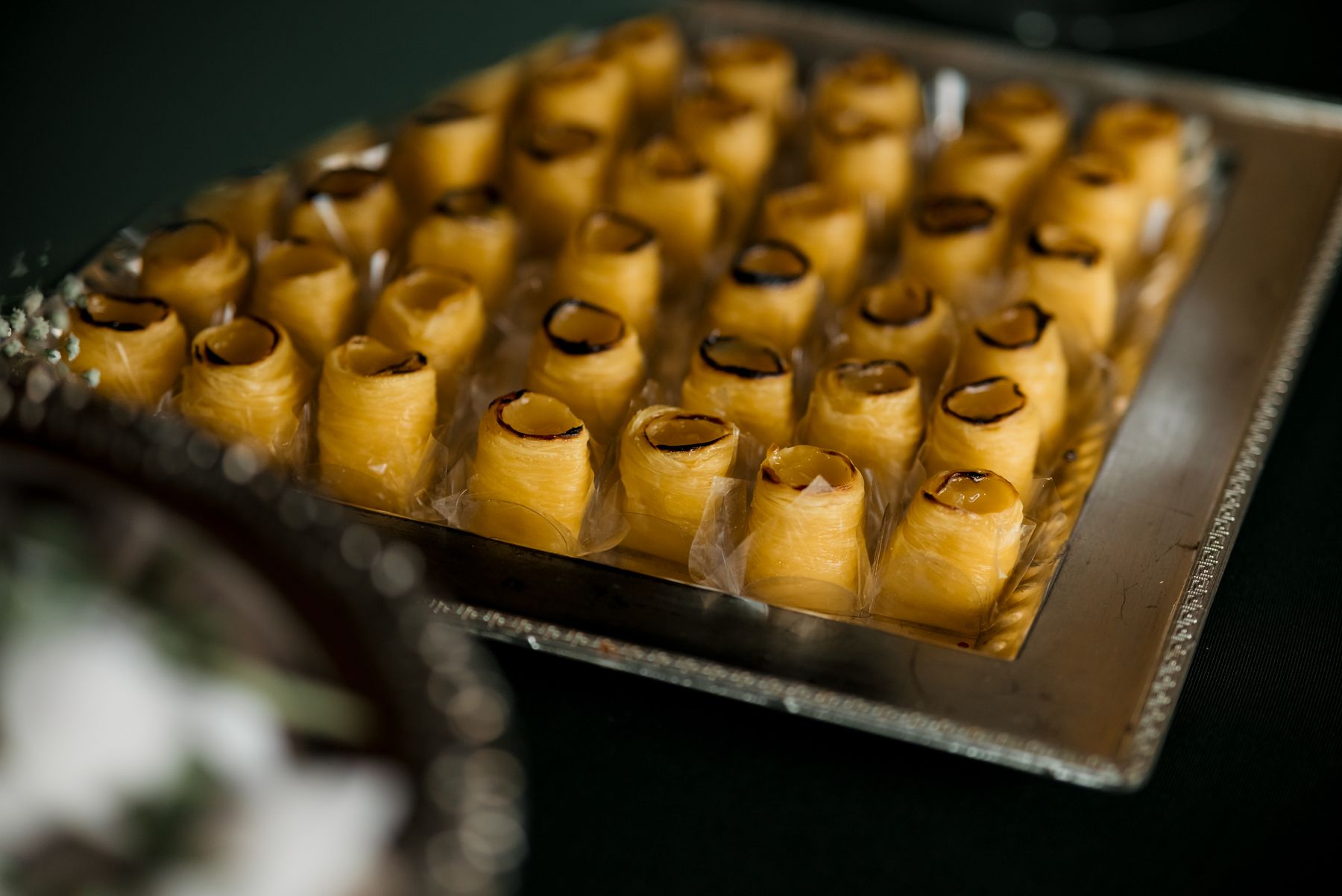 Arabic sweets
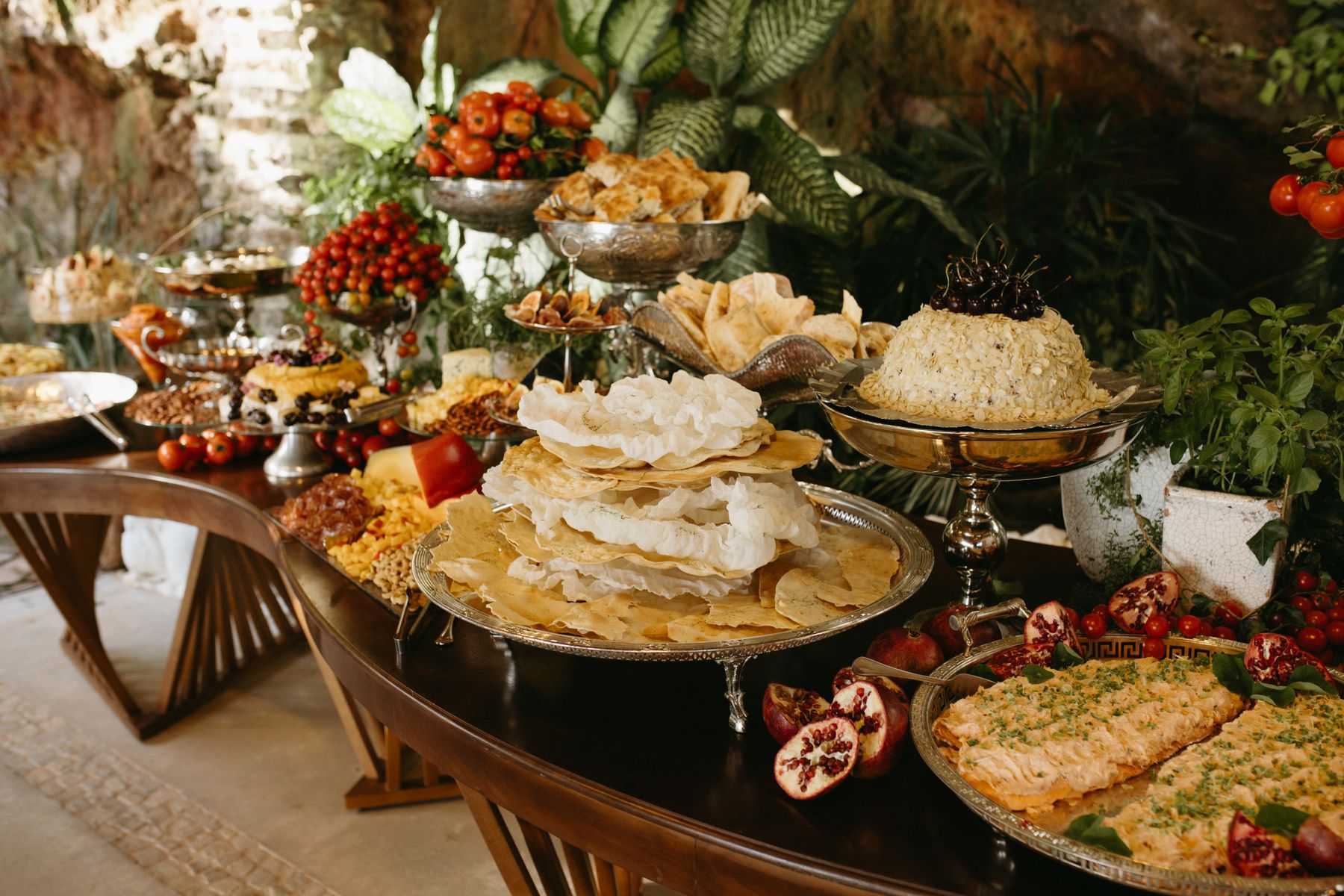 Wedding-level presentation
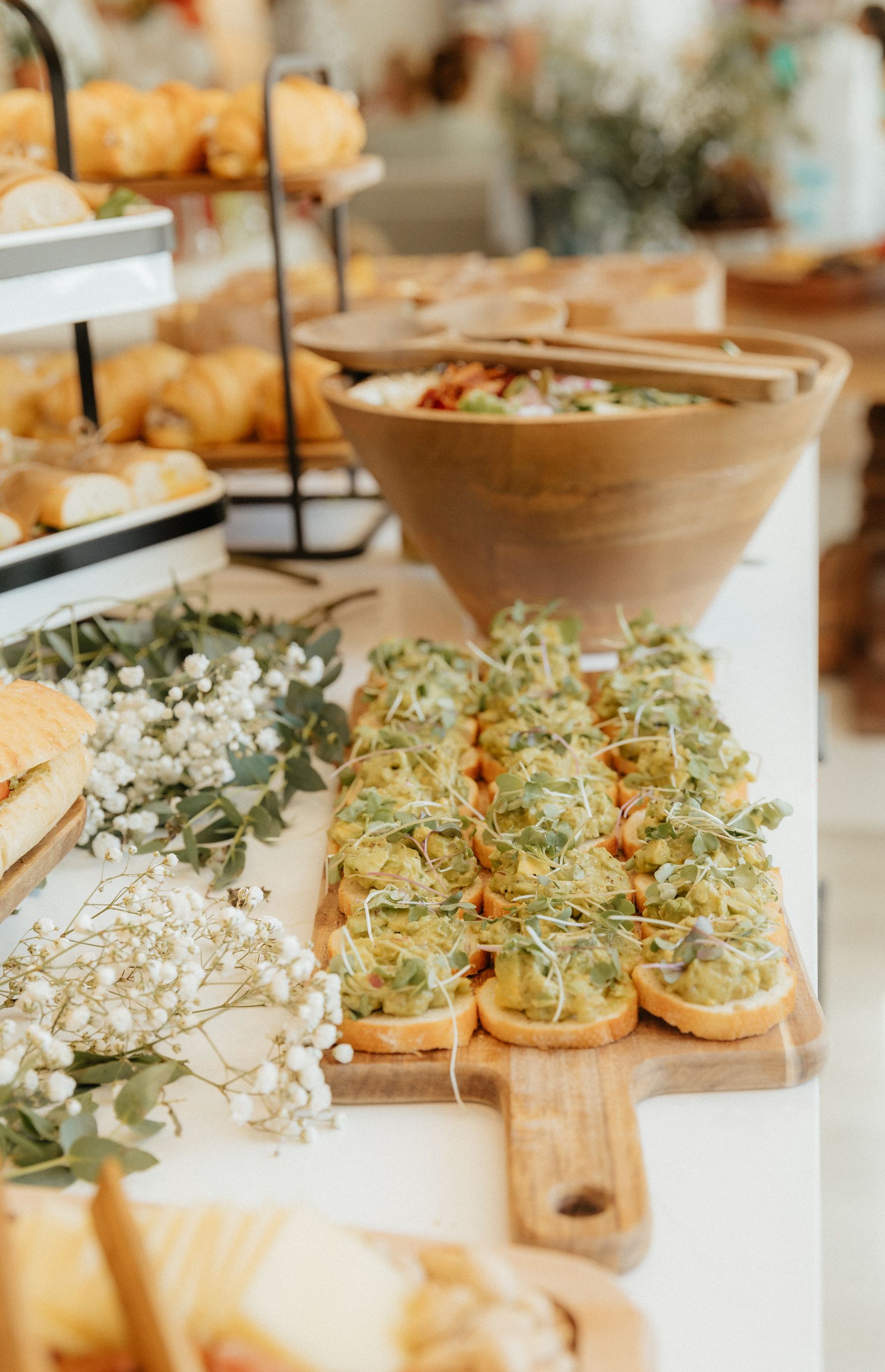 Passed + buffet service
Build the wedding around the food your family recognizes.
These are menu directions, not rigid categories. Families combine traditions, spell dish names differently, and often have one specific version that matters more than any “standard” recipe.
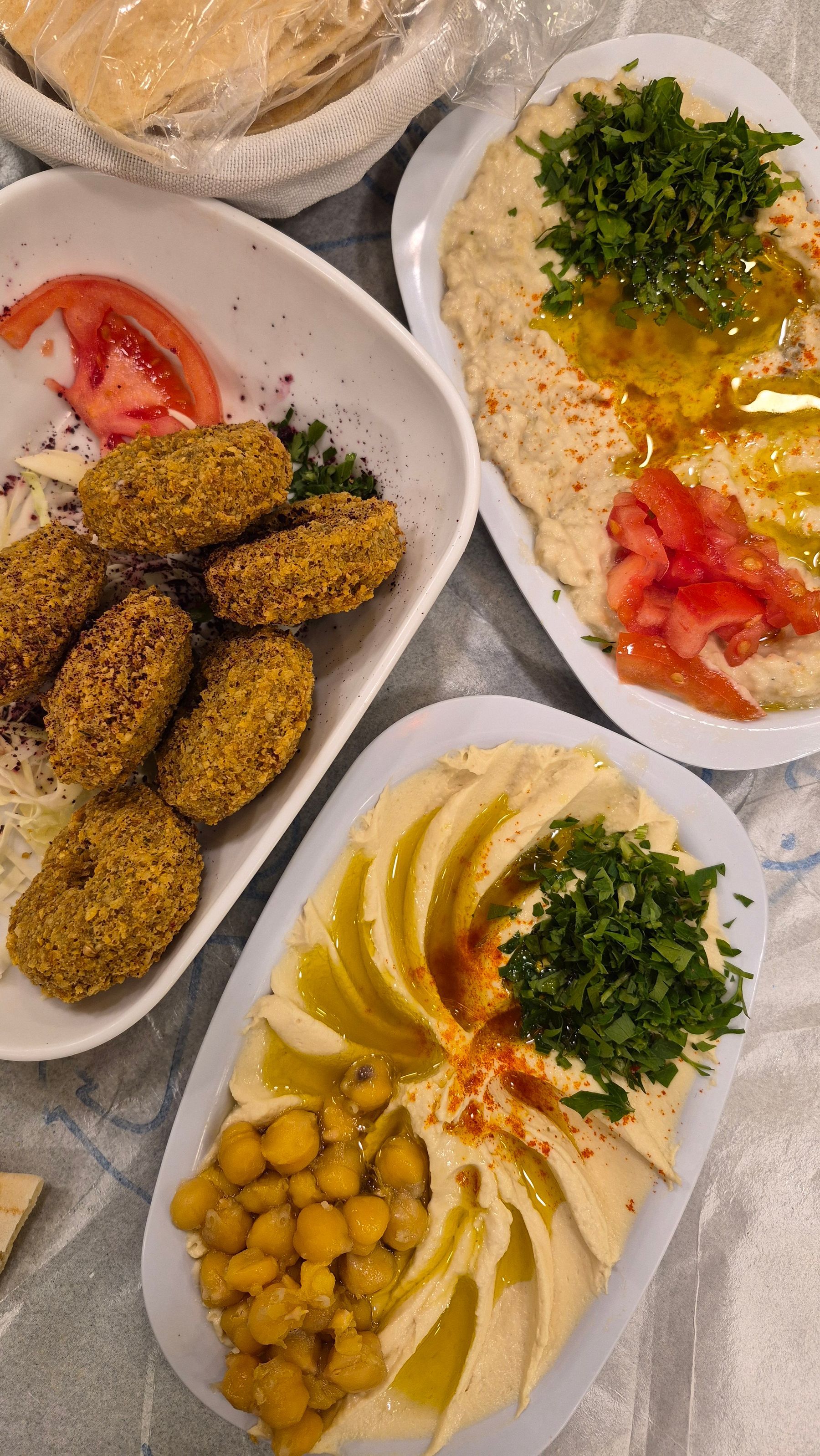
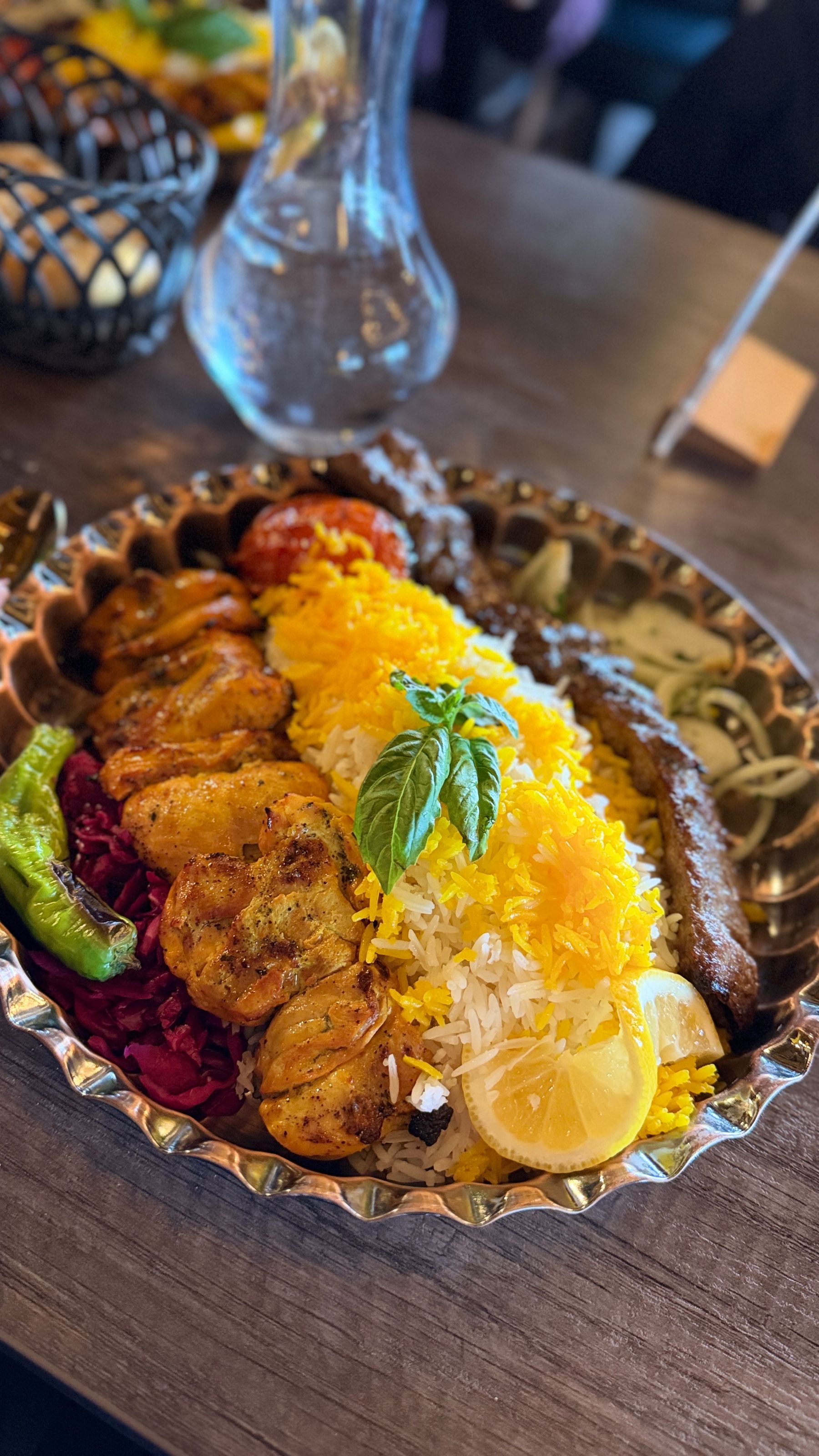
Mezze + charcoal grill
A table-first menu with layers of cold and hot mezze, fresh salads, bread and grilled proteins.
- Hummus, mutabbal, labneh, muhammara
- Tabbouleh, fattoush, warak enab
- Kibbeh, kafta, shish tawook, lamb
- Baklava, knafeh, maamoul
Rice dishes with ceremony
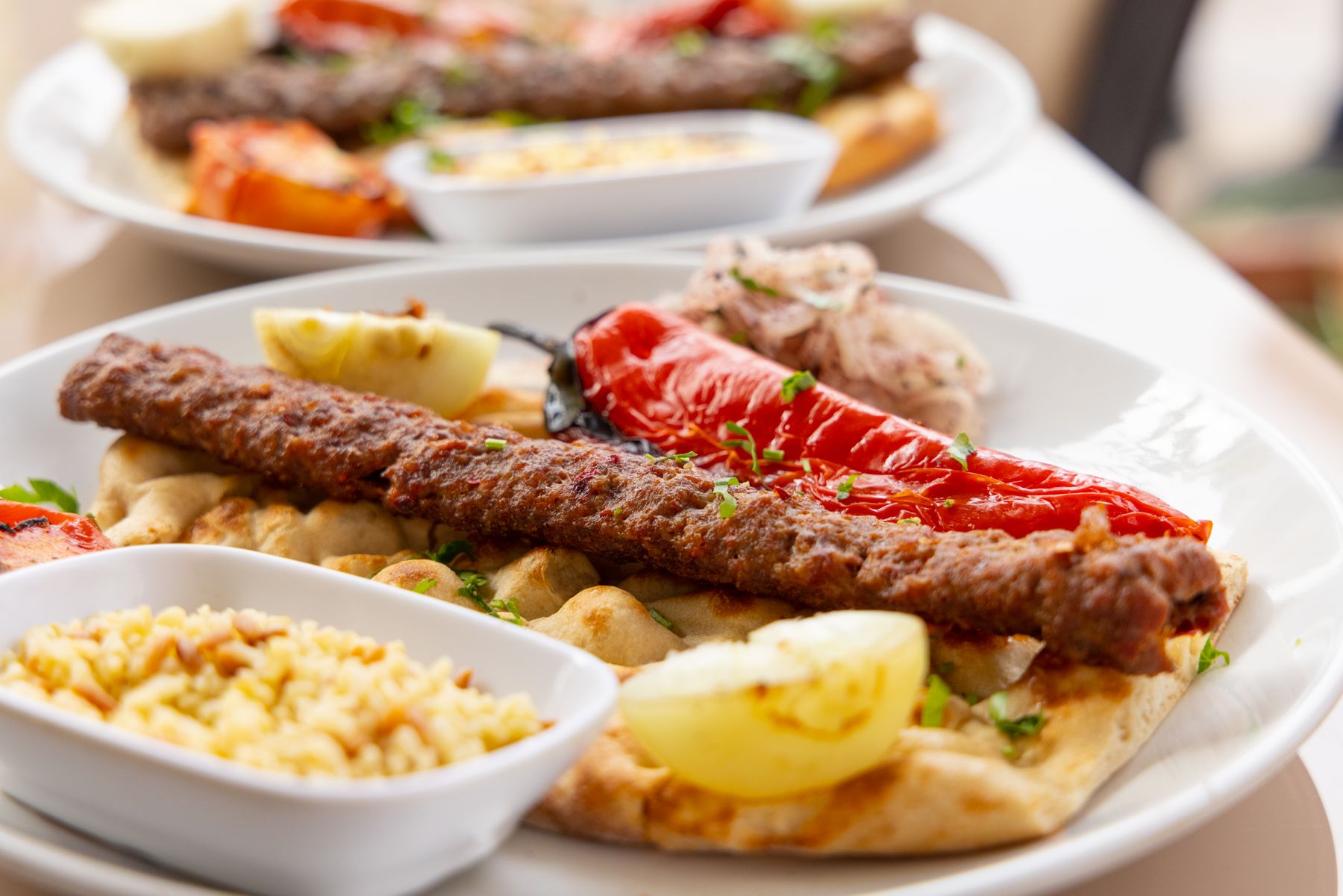
For families who want the centerpiece to carry as much meaning as the mezze around it.
- Mansaf with jameed
- Maqluba or musakhan direction
- Stuffed lamb / large-format rice platters
- Yogurt, salads, pickles and bread
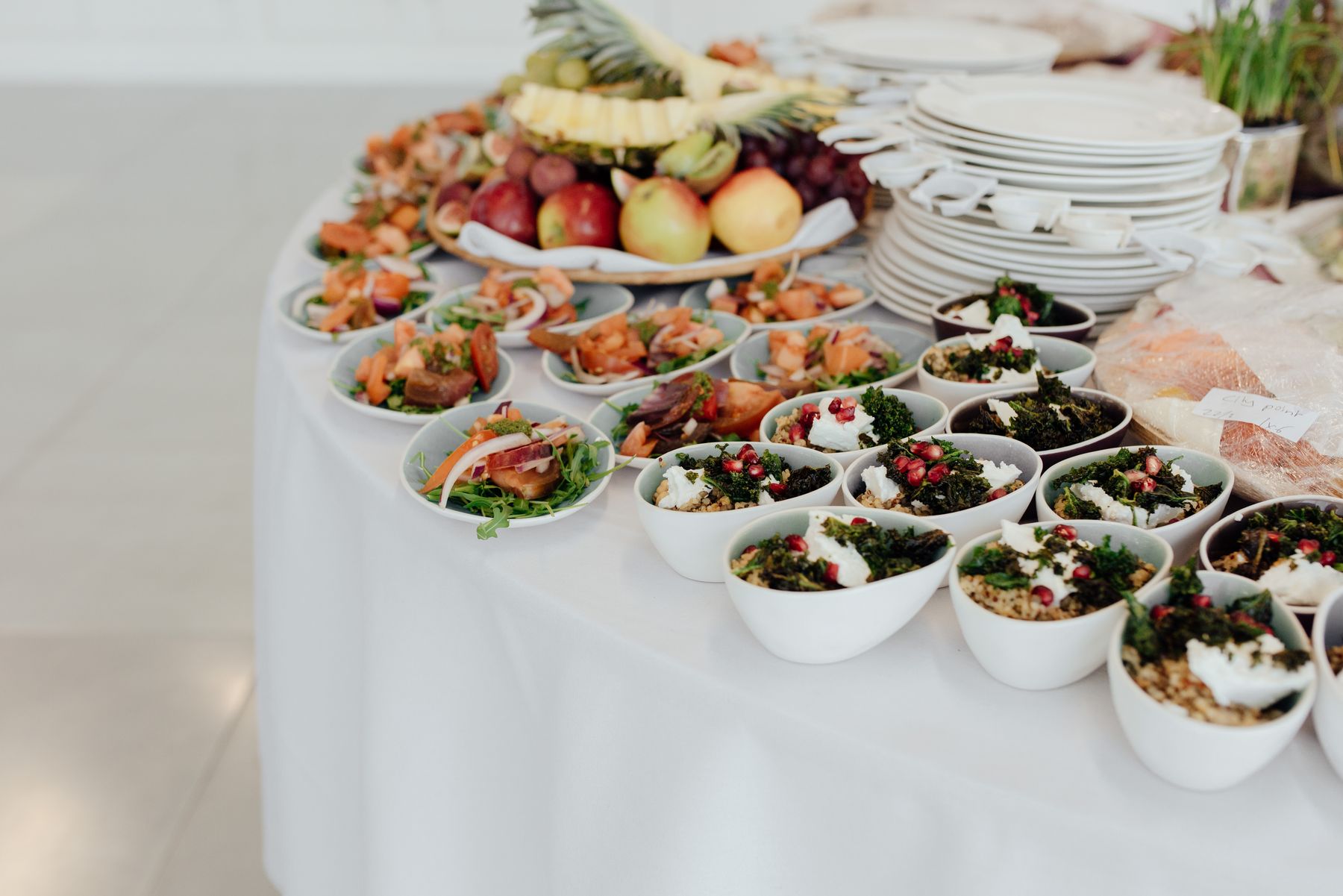
Abundance with brightness
Lots of contrast: herbs, lemon, smoky eggplant, crisp salads, warm bread and a strong grill program.
- Kibbeh, sambousek, grape leaves
- Mixed grills and shawarma
- Freekeh, rice and roasted vegetables
- Fresh fruit + layered sweets
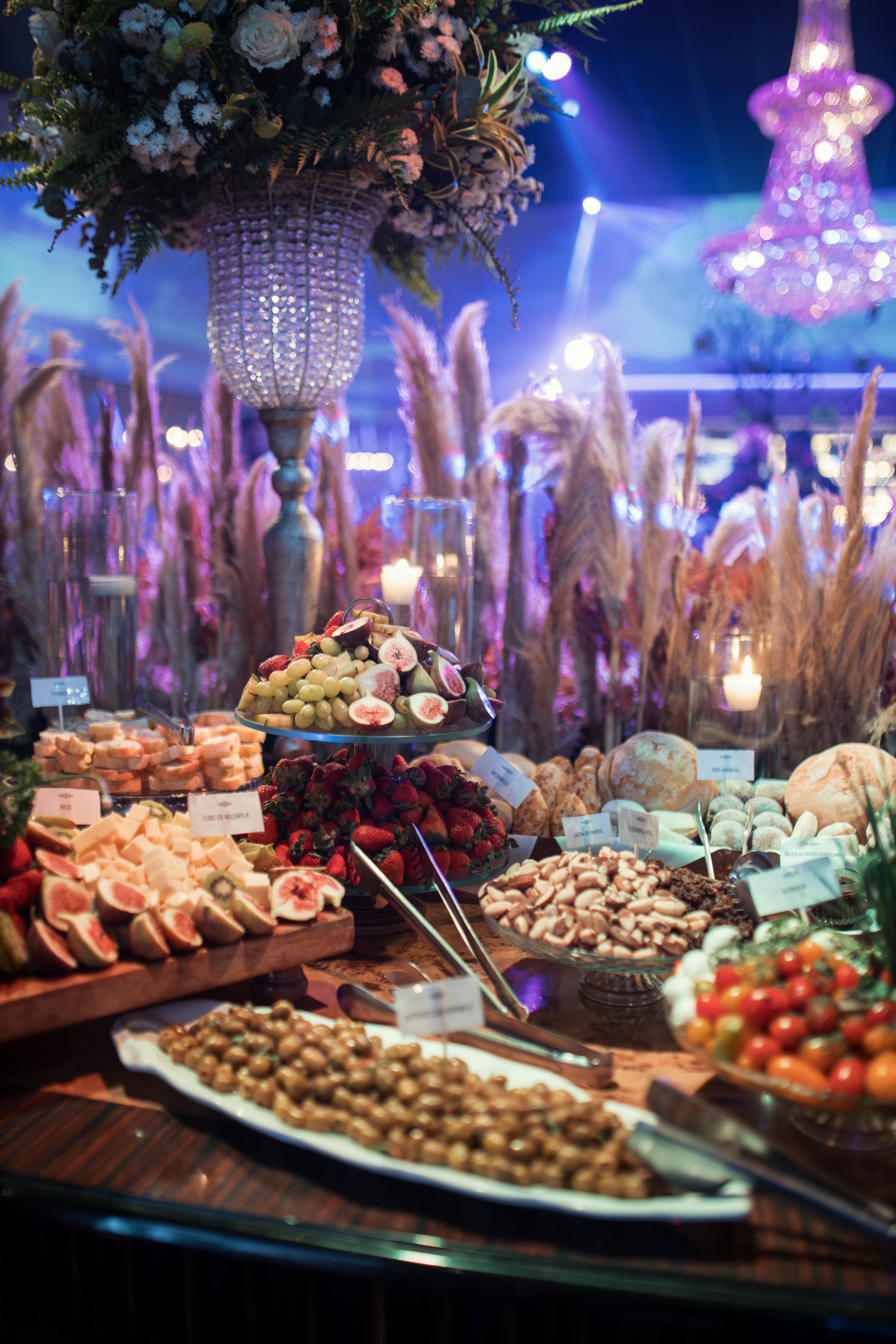
Rice, lamb + coffee hospitality
Large-format platters, aromatic rice, slow-cooked meats and a welcome ritual that can begin before dinner.
- Kabsa, machboos or ouzi direction
- Harees where meaningful to the family
- Whole lamb / large-format presentations
- Gahwa, dates and Gulf sweets
A feast still has to work at 220 guests.
A family recipe can be perfect for twenty and fail at two hundred. The wedding version needs a production plan: where hot food is held, how often grills are replenished, how quickly bread reaches tables, which rice dishes tolerate service time, and whether the buffet needs one line or two.
For large Arab weddings, we plan food and guest movement together so the generosity stays intact without making everyone stand in line through the first dance.
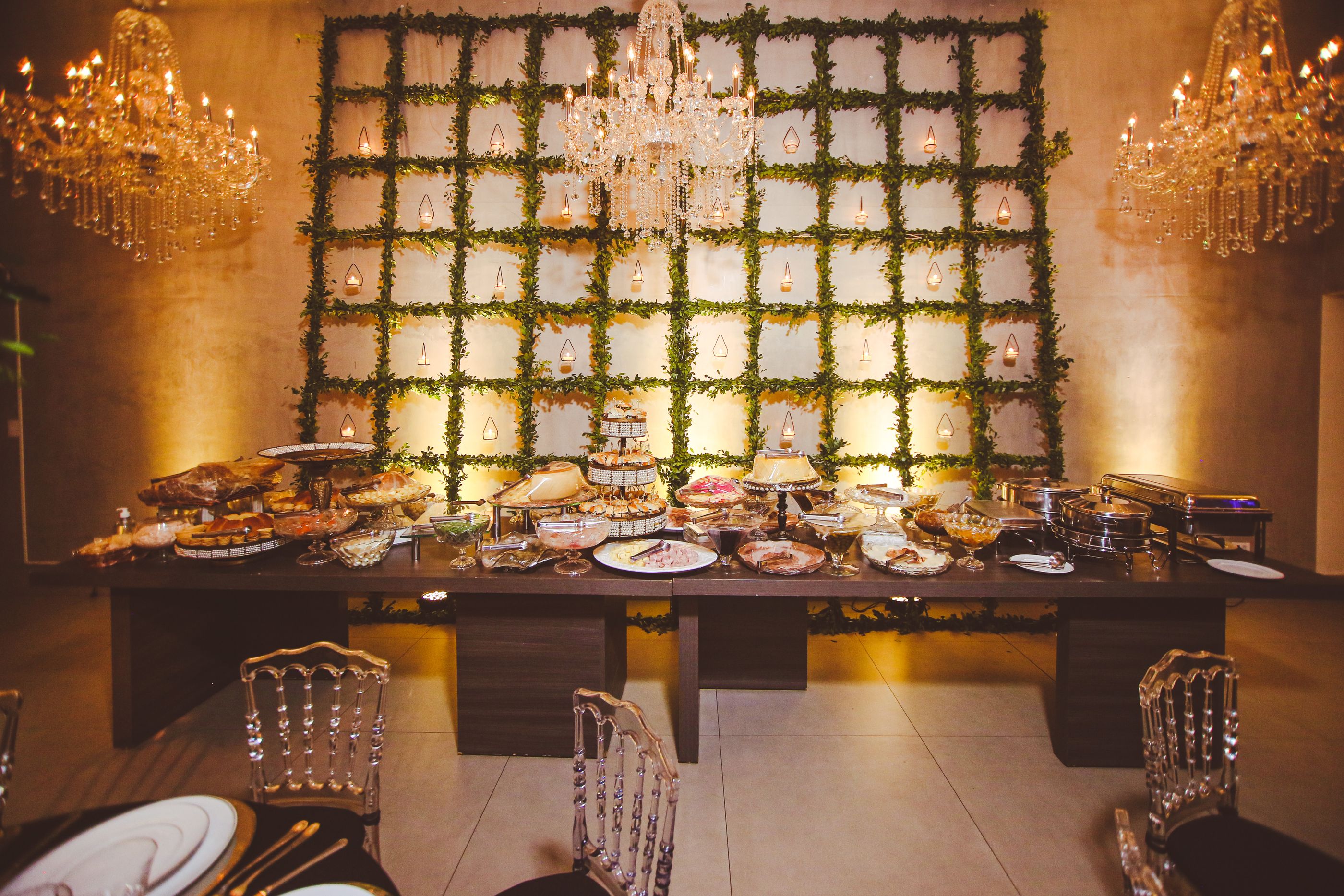
The food can be traditional. The room can still feel luxury.
Use the right vessels, risers, linens, warmers, signage, floral placement and service team so the catering belongs in the same visual world as the rest of the wedding.
How dinner reaches the room matters as much as what is served.
Buffet
Best for variety and abundance. Large guest counts often benefit from mirrored or two-sided lines.
Family-style
Platters on the table preserve the communal feeling, but need enough tabletop space and fast replenishment.
Plated
A cleaner formal experience with fewer dishes, controlled portions and a tighter dinner timeline.
Stations + hybrid
Pair a focused dinner with mezze, live grill, shawarma carving, sweets, coffee or late-night stations.
A feast should look generous before anyone takes the first bite.
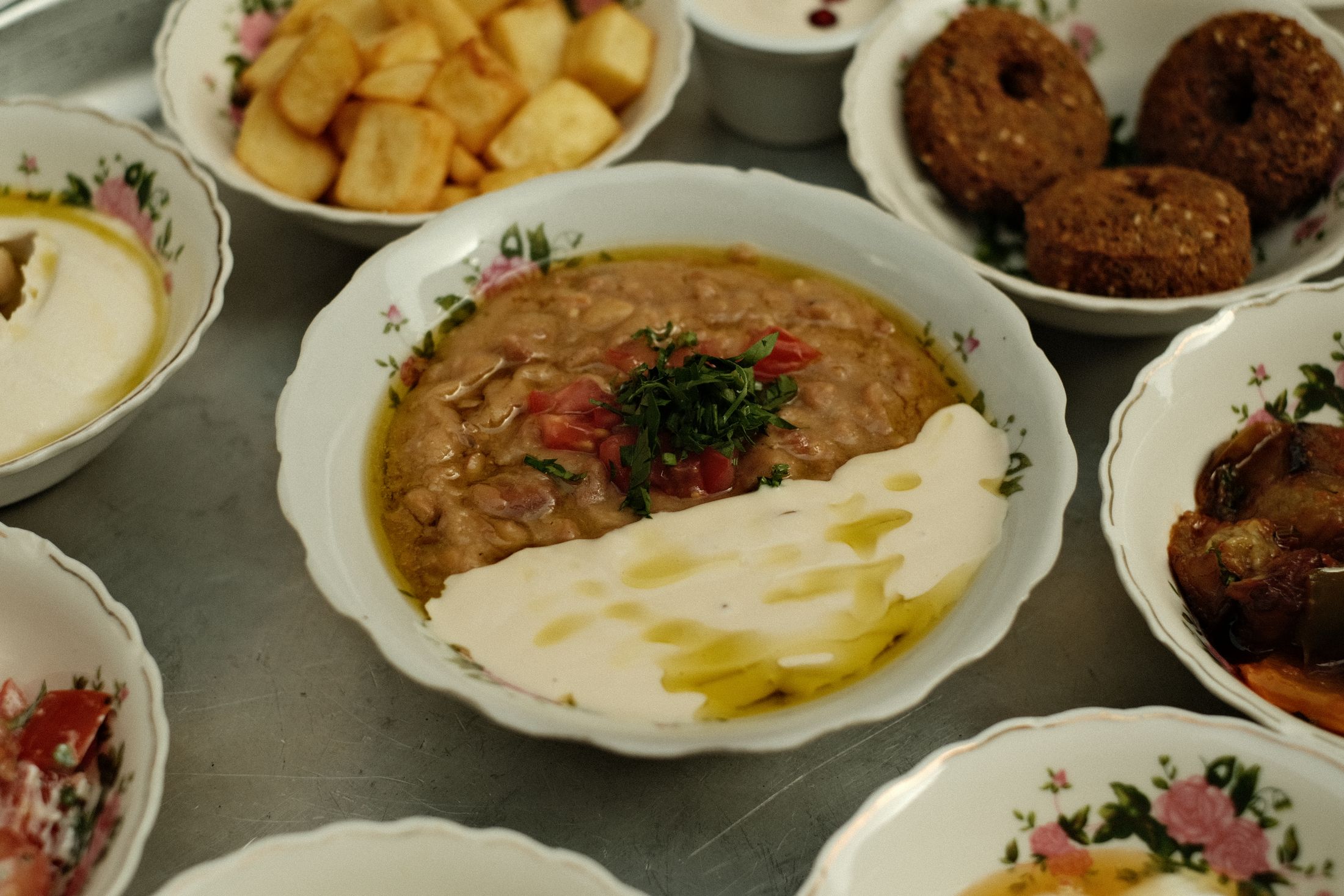 Mezze display
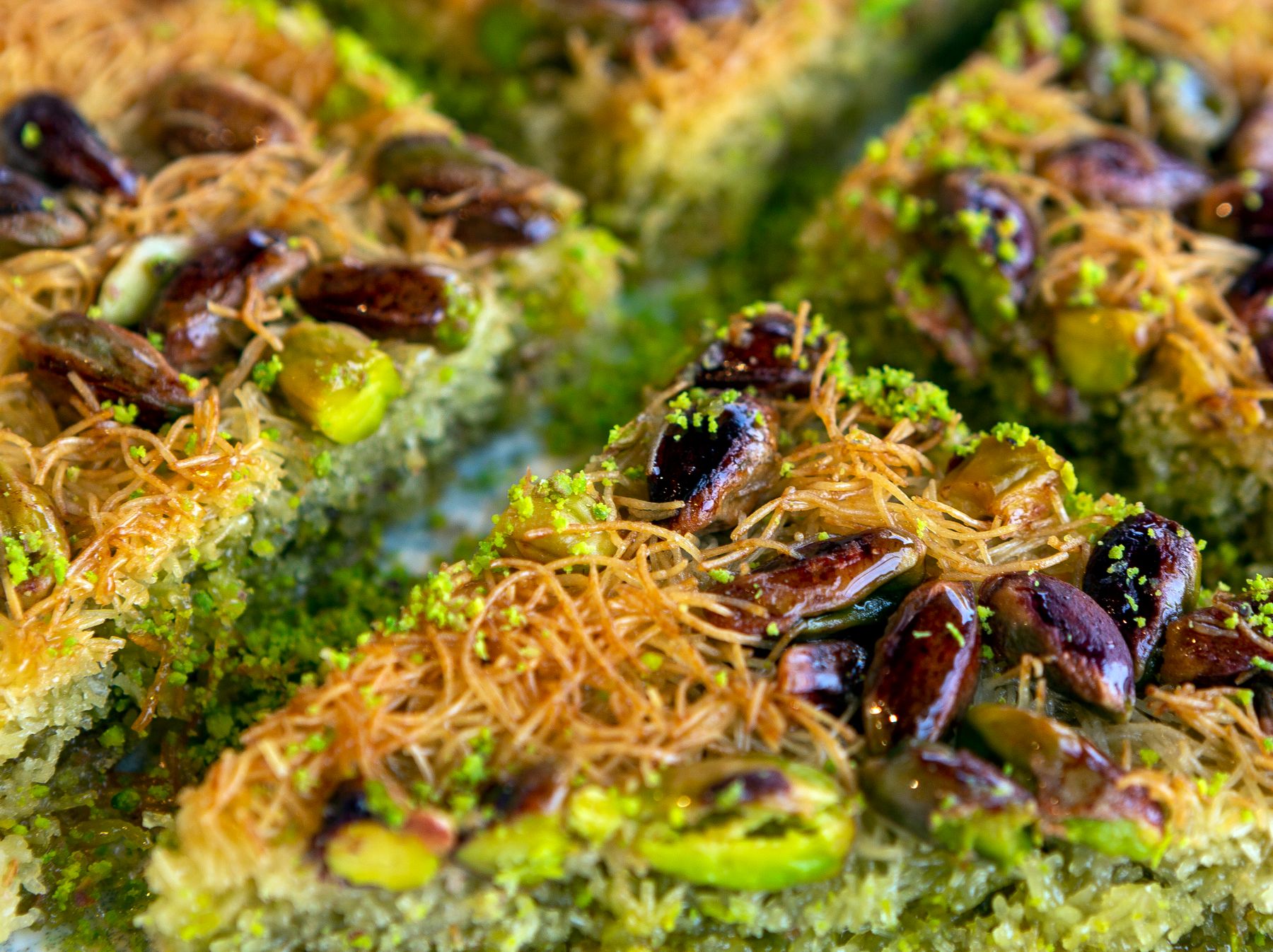 Baklava
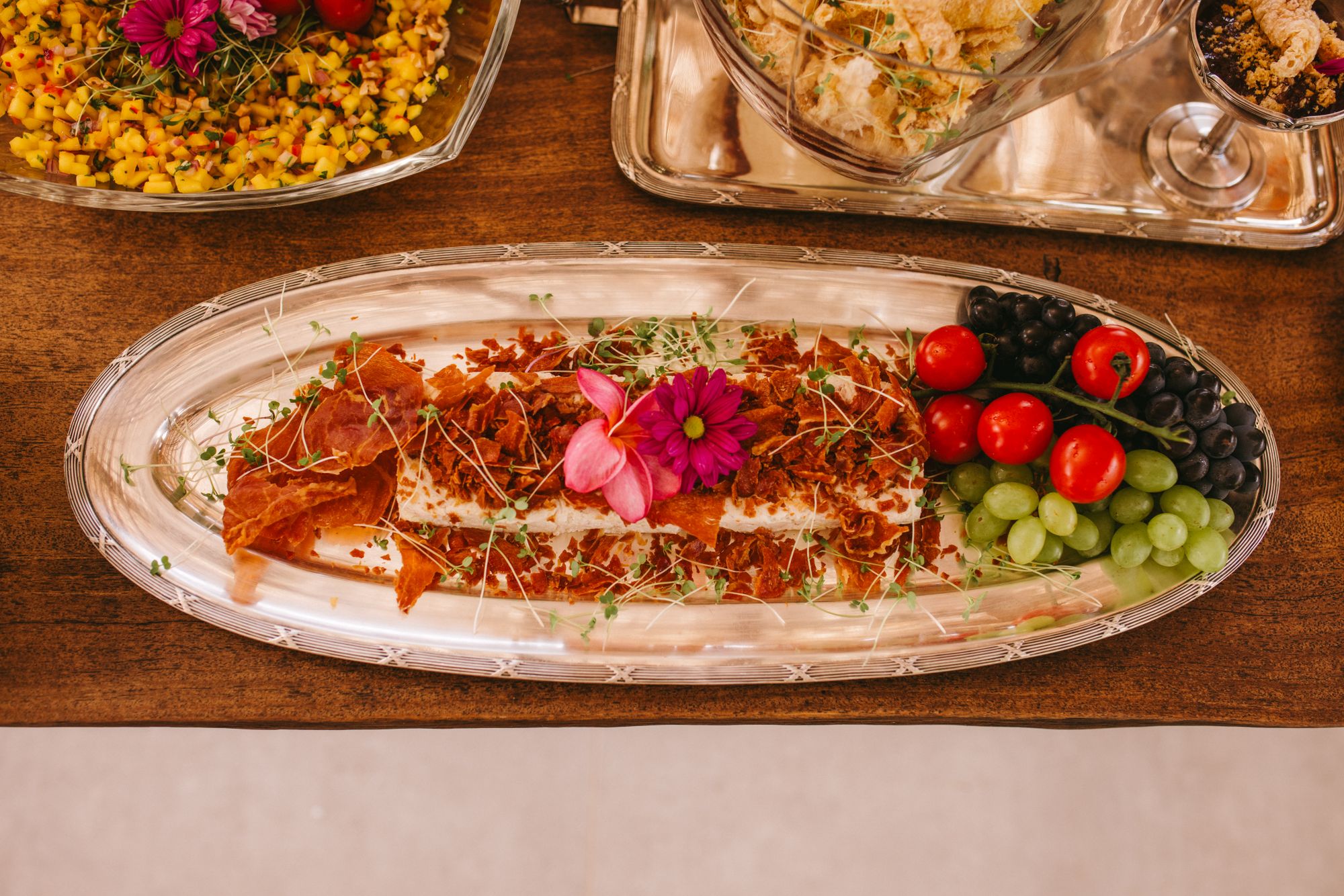 Luxury wedding food display
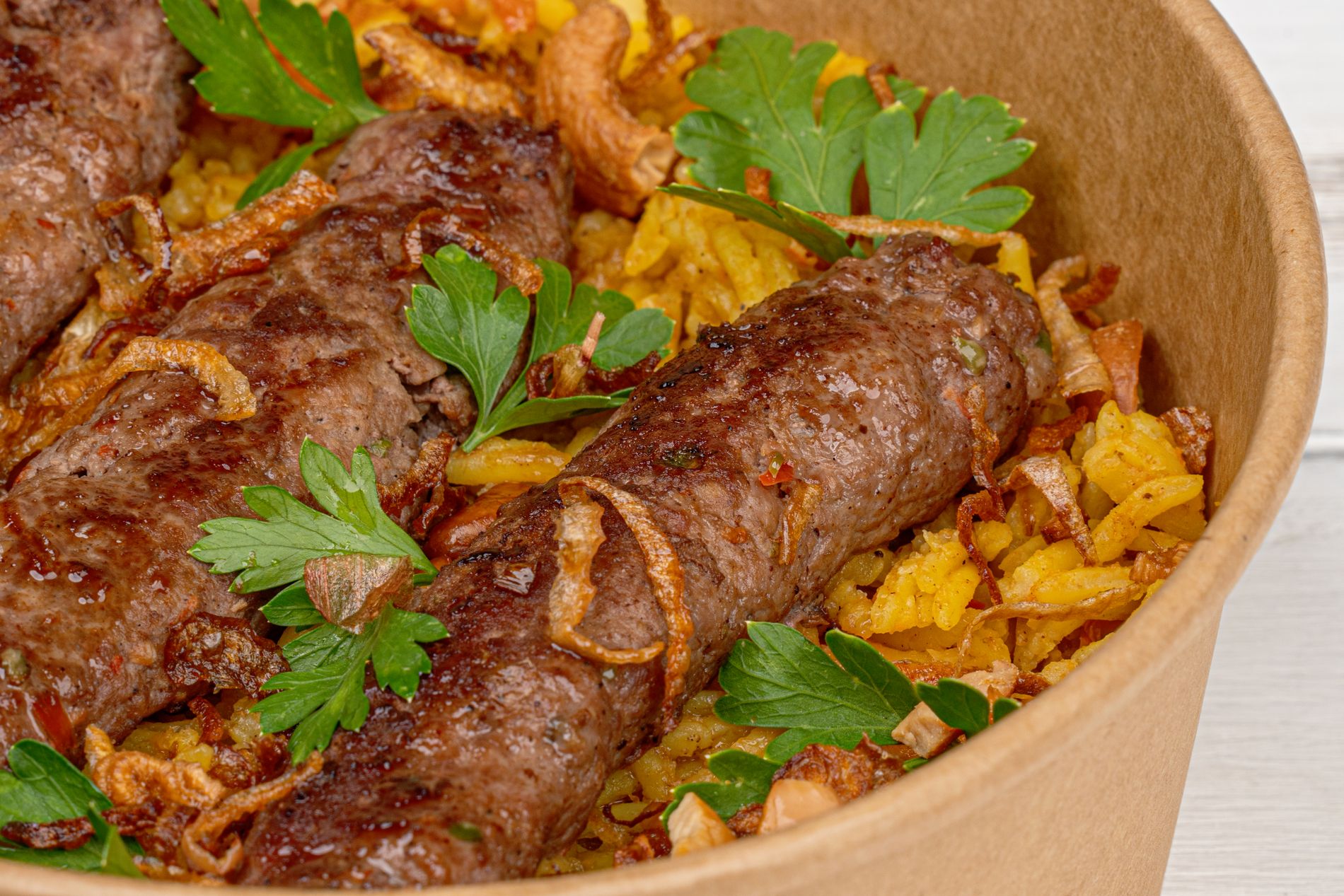 Kebab + rice
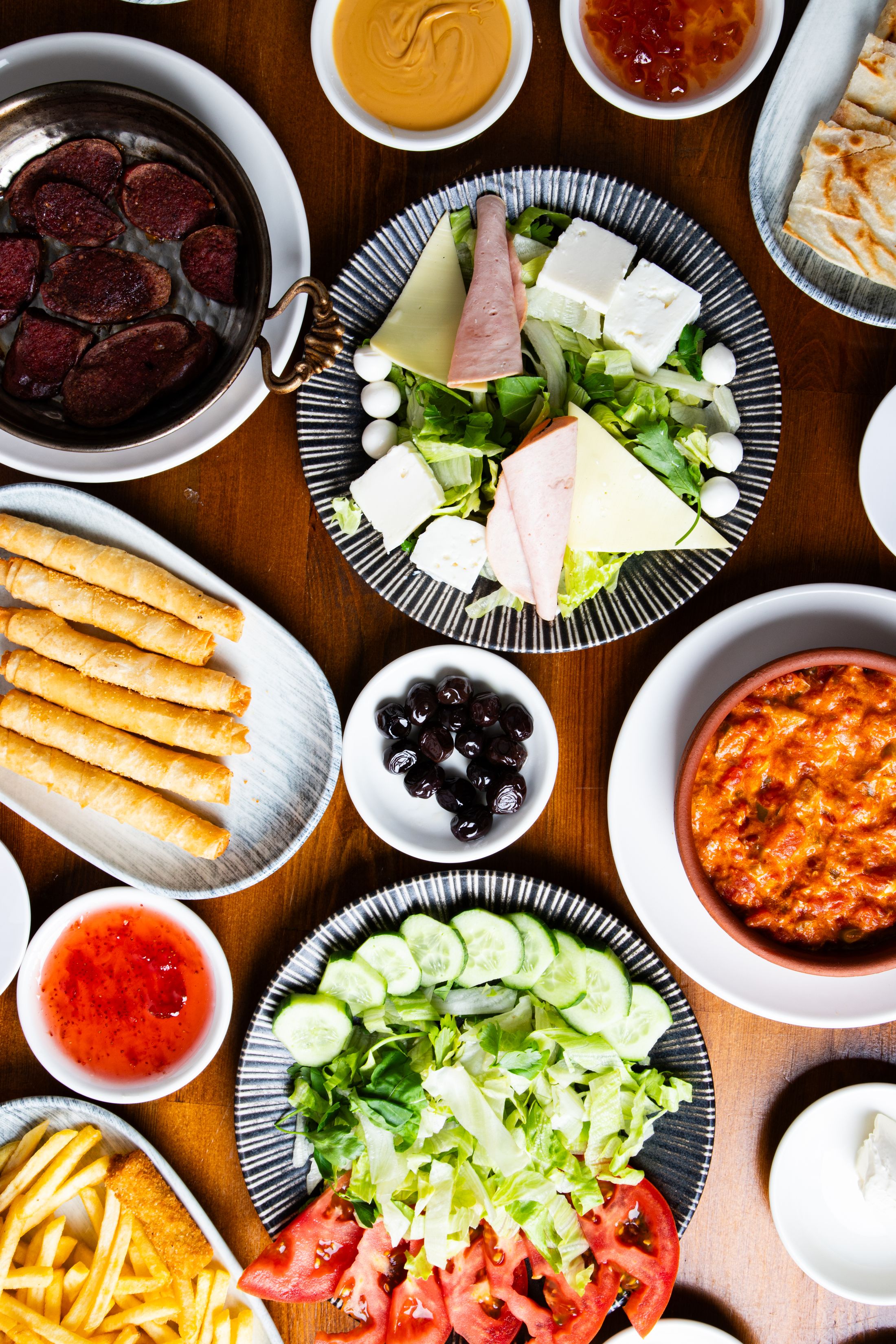 Buffet variety
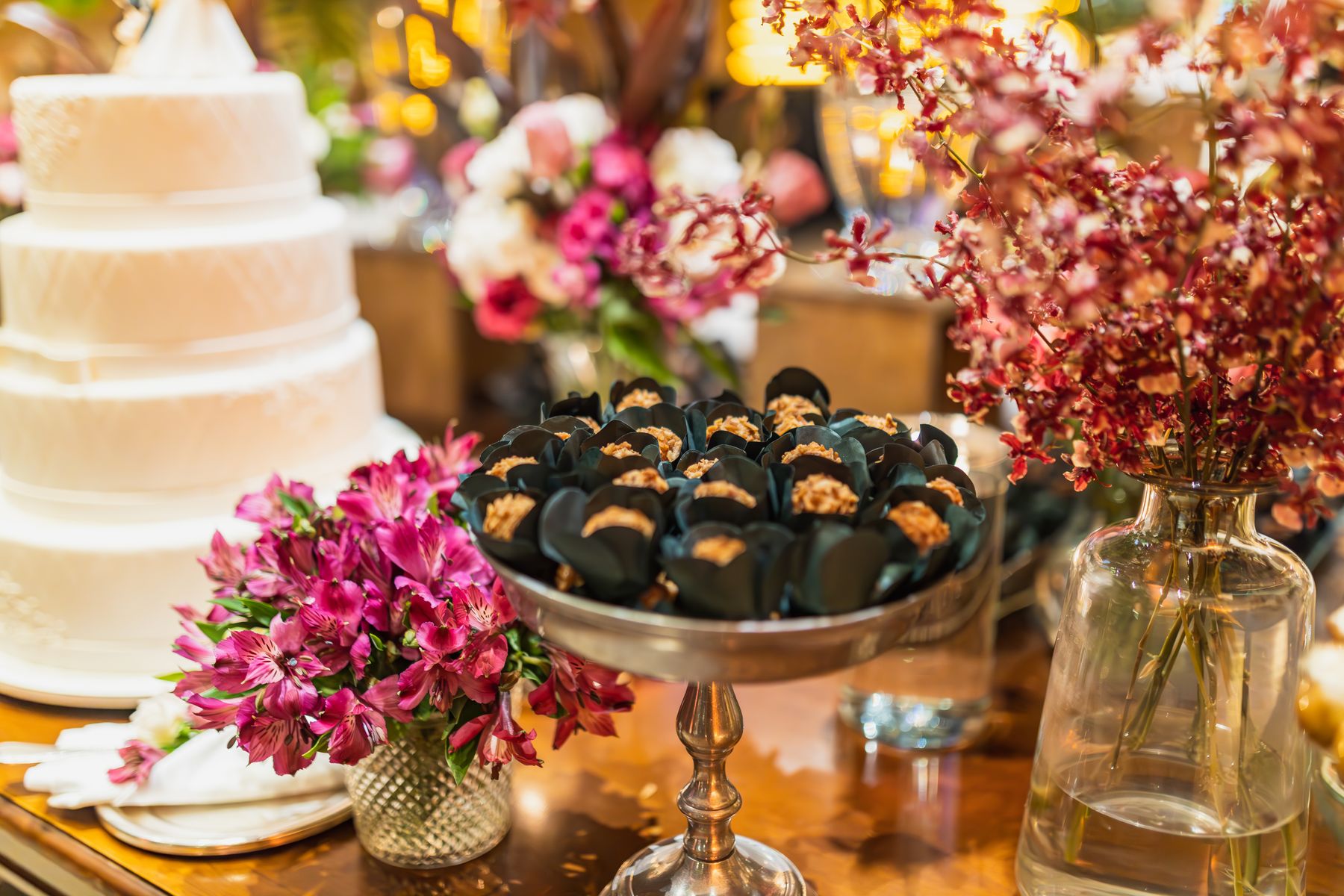 Dessert service
Do not leave “halal” as a checkbox.
Families use the word halal with different expectations. The safest approach is to state exactly what matters before a caterer is matched.
- Halal or zabiha meat and poultry sourcing
- Supplier documentation if your family requires it
- Whether a fully halal kitchen is important
- Alcohol-free preparation or service requirements
- Separate equipment / cross-contact concerns
- Clear vegetarian, vegan and allergy labeling
Arab on one side. Something else on the other.
A blended wedding does not need two unrelated buffets. Keep the Arab menu strong, then add the second culture where it makes the experience more personal.
- Arab + American
- Arab + Persian
- Arab + Armenian
- Arab + Indian / South Asian
- Arab + Mexican / Latin
- Arab + Mediterranean / European
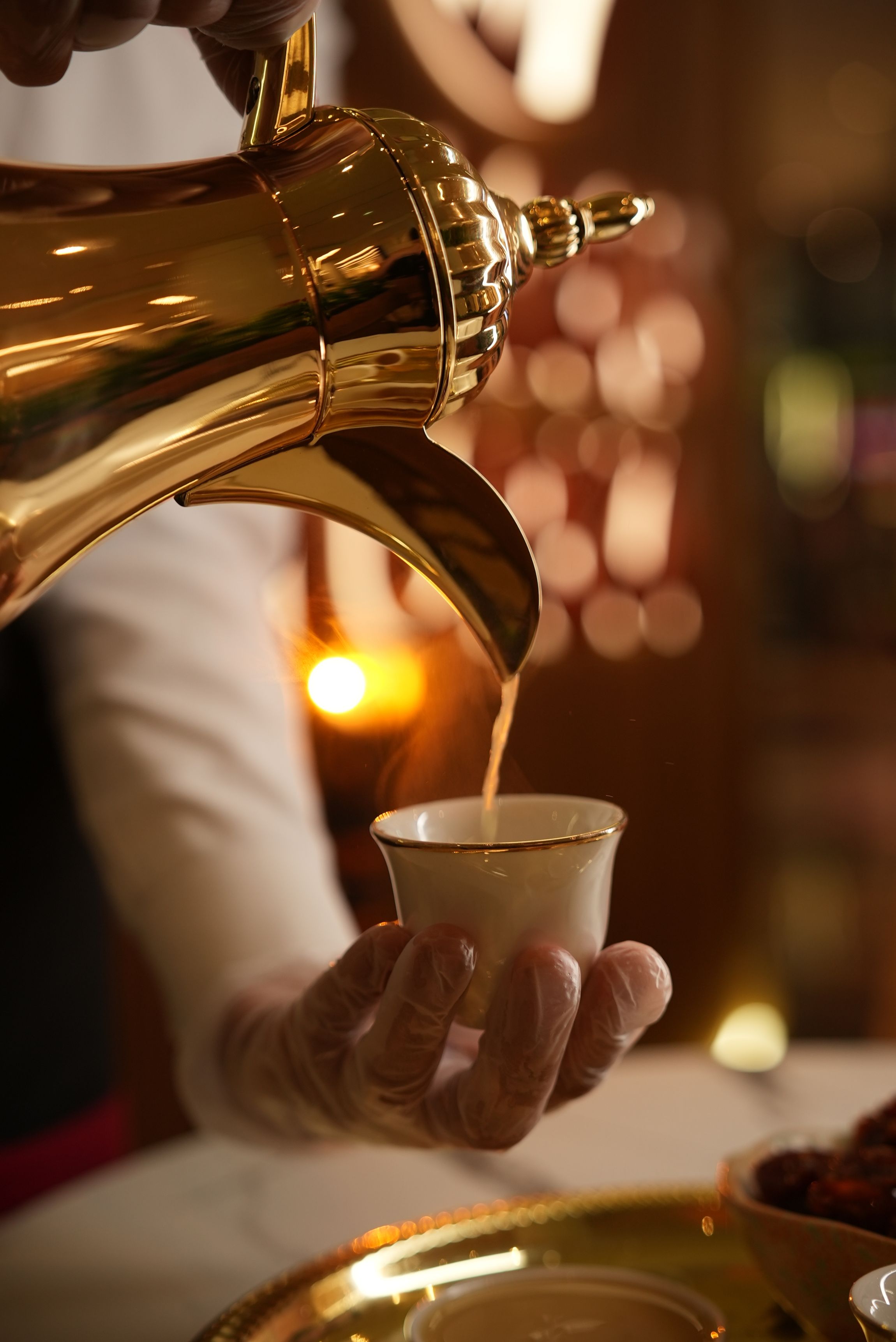
For some families, Arabic coffee is not a beverage station. It is hospitality.
Gahwa and dates can greet guests before the ceremony, live near the majlis or lounge, or return after dinner with sweets. If the ritual matters to your family, tell us who should serve it, where it should happen and whether the service is ceremonial or simply available throughout the reception.
That detail changes staffing, equipment, cupware, hot-water access and placement — which is exactly why it should be designed early.
Can the venue actually support the Arab wedding menu you want?
“Outside catering allowed” is only the first answer. The real questions are about grilling, hot holding, loading, buffet flow and beverage service.
Outside caterer rules
Confirm approved-vendor lists, kitchen fees, insurance, security, fire-safety documents and deadlines before the contract becomes nonrefundable.
Grilling + live cooking
Ask exactly where charcoal, gas, open flame, shawarma equipment or live grill stations are permitted. “No open flame” can change the menu completely.
Real production capacity
Verify sinks, refrigeration, ovens, warming cabinets, prep tables and power. A plating kitchen is not the same as a working catering kitchen.
Loading to ballroom
Walk the path from truck to kitchen to reception floor. Long routes and shared elevators affect staffing and how hot the food reaches guests.
Buffet footprint
Large weddings may need mirrored lines or multiple service points. The buffet should not block the entrance, stage or dance floor.
Gahwa + sweets service
Confirm hot-water access, electrical capacity, service tables, cups, bussing and where servers can move without colliding with dinner service.
Arab wedding catering across LA, Orange County & San Diego.
Hotels, ballrooms, cultural venues, private estates and homes — the catering plan should be built around both the menu and the venue.
Los Angeles
Arab and Middle Eastern wedding catering throughout Los Angeles County.
Orange County
Full-service Arab wedding and private-event catering throughout Orange County.
San Diego
Arab wedding catering from central San Diego through North County.
The quote is more than “food per person.”
Two weddings with the same guest count can need completely different teams, equipment and production plans.
We prefer to price the actual event scope rather than publish a misleading one-size-fits-all number.
A cleaner way to build Arab wedding catering.
Send the brief
Date, venue, guest count, family background and the dishes that matter most.
Choose a direction
Levantine, Palestinian/Jordanian, Lebanese/Syrian, Gulf or a custom blend.
Set the standard
Halal needs, service format, rentals, coffee service and presentation level.
Match the team
Choose a catering partner that fits the menu, venue, scale and logistics.
Coordinate service
Lock timing, staffing and food flow so dinner supports the reception instead of stopping it.
Before you request a quote.
What food is typically served at an Arab wedding?
There is no single required menu. Depending on the family and region, a wedding may include mezze, kibbeh, stuffed grape leaves, grilled meats, shawarma, rice dishes, mansaf, maqluba, kabsa or ouzi, salads, fruit, Arabic sweets, tea and Arabic coffee.
Can you arrange halal or zabiha catering?
Yes, it can be requested. Tell us the exact standard your family expects — sourcing, documentation, kitchen practices, alcohol-free preparation or other requirements — so the catering partner can be matched appropriately.
Can we serve mansaf at a formal wedding?
Yes. Mansaf can be presented traditionally on large platters or adapted into a more controlled banquet service. The right format depends on guest count, family preference and how much of the traditional communal presentation you want to preserve.
Can we combine Lebanese, Palestinian, Jordanian, Syrian or Gulf dishes?
Absolutely. Many families already cross regional lines. The goal is to build a coherent menu rather than force the wedding into a single category.
Can Arabic coffee and dates be part of the reception?
Yes. They can be used as a welcome, served from a dedicated hospitality station or brought back with dessert. If your family follows a specific serving ritual, tell us so staffing and setup can reflect it.
Can you cater a multicultural Arab wedding?
Yes. An Arab core menu can be paired with American, Persian, Armenian, Indian, Mexican or another cuisine through selected entrées, stations or late-night food rather than two completely separate dinners.
Do you serve Los Angeles, Orange County and San Diego?
Yes. The service focus is Southern California, including Los Angeles County, Orange County and San Diego County.
How far ahead should we book?
Large weddings, popular Saturdays and events requiring specialized halal sourcing, live cooking or a large service team should be planned early. Availability depends on the catering partner and event scope.
Tell us what your family expects from the table.
Send the essentials once. We’ll use them to understand the region, dishes, halal requirements, service level and catering partner your wedding needs.
Arab wedding catering · Arabic wedding catering · Middle Eastern wedding catering · halal wedding catering · Los Angeles · Orange County · San Diego